Immune System
Thirst, Sweat, & Urine: What is Normal?
In contrast to the requisite ruling out of red flags by most nurses in conventional medical settings, the reason Chinese Medical practitioners ask about almost every system in your body is because we are diagnosing based on complete patterns—not just symptoms.
For example, if someone comes in for acid reflux, we cannot know their prescriptions until we know how often they urinate or poop, what each one is like, whether they experience headaches or dizziness, which part of the head they get their headaches in, how is their appetite, how thirsty they are during the day versus in the evening, etc. etc. This is because we are one of the only true forms of holistic medicine.
So, what is normal?
A normal amount of urination is approximately 6 times a day (yes, this includes waking at night). Much less than that and you are likely either retaining, or not drinking enough water in the first place. More than 6 indicates either a weakness in the urogenital microbiome, or excessive inflammation in the urogenital microbiome, which over time can lead to local weakness by putting strain on it. The remainder of the intake questions will determine which of the two is the case.
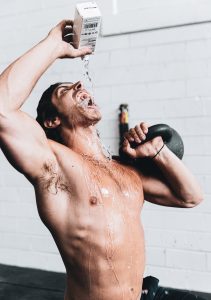
People should sweat, but not excessively so. Chinese Medicine is critical of HIIT or marathon training, hot yoga, and sauna therapy in most cases. While these might all feel great in the short-term and/or be proven to offer certain isolated benefits in the short-term, we believe they ultimately deplete the body’s healthy metabolic fluids. On the other hand, never sweating (exercising) at all is obviously just as harmful.
While some people barely break a sweat even when they exercise, others are drenched by the time they finish their morning commute, especially triggered by certain climates or seasons. The former can either indicate body fluid depletion or a malfunction of the immunological “qi.” The latter can either indicate inflammation, fluid retention, or also a malfunction of the immunological “qi.” This is where diagnoses and prescriptions get tricky.
Many western doctors have now begun to recognize the health benefits of the Chinese herb, astragalus, which on one hand is great. On the other hand, their recognition by way of empirical studies poses the challenge of having no comprehension of Chinese Medicine. If you give astragalus to the former example of a “cold-body person” with a simple immunological malfunction they will feel amazing and sing your praises. If you give it to someone with both immunological malfunction AND fluid deficiency it will do almost nothing. Worse, if you give it to a “hot-body person” with inflammation and fluid retention they will feel much worse.
Finally, it is normal to be thirsty, for 6-9 cups of water per day. A lack of thirst tells us there is fluid retention in the microbiome, signaling to the brain that it’s got plenty of liquid down here—no need to hydrate! This is dangerous, and better to fake it ‘til you make it in acquiring thirst. On the other pole are those who are ravenously or insatiably thirsty, which informs us of inflammatory heat in either their respiratory microbiome, gastrointestinal microbiome, or both, drying out their fluids. As always, the most complicated patterns are those who are generally unthirsty followed by sudden bouts of desperate thirst. This is a combination pattern that requires more thought, trial, and error.
I hope this was interesting and informative. One of western medicine’s shortcomings is its reliance on tests and labs to determine whether we are healthy or normal. While these are undeniably valuable, they tell only part of the story, which is why so many diseases get caught too late. Chinese Medicine is more brilliant in its neurotic recognition of pathologies in any abnormality, any imbalance, as something to rectify before it spirals into disease.
Refuting the “Man Cold” Cliche
Well, if Covid and seasonal allergies had a lovechild its name would apparently be the upper respiratory pathogens of Winter, 2023. I experienced both personally and professionally, not only the severity of these viruses’ symptoms, but maybe even more troubling was how stubborn they were to resolve. Coughs that would linger for weeks on end, allergies turned to sinus infections, and one friend had the shingles virus transform into a vicious cough, which in my humble opinion occurred because he didn’t properly treat the former with Chinese Medicine.
I am grateful we seem to be passing simultaneously, likely not coincidentally, out of this post-pandemic ripple effect along with the cold weather. Besides dilating the blood vessels of our respiratory microbiomes, thereby giving pathogens wider exit pathways, the warm air should eventually aid in transforming latent mucus and boosting our metabolic energies enough to in turn boost our immunological energies, or “wei qi.”
I plead ignorance, in the past few years more than ever, to most current events, trends on social media, philosophical platitudes, and pop culture; and I often question whether that makes me an “ignorant person”—especially since we will all eventually die still relatively ignorant about most things and peoples. Besides my family, I devote most of my time and mental energy to Chinese Medicine. Whatever is left over at the end of each day are mere scraps, an hour or two at most, and I choose to shut my mind off with friends and/or sports. Maybe in another chapter of my life I’ll read more articles and keep up with external themes and events.
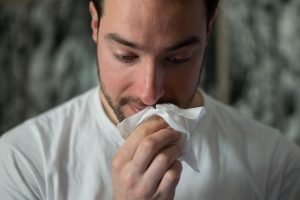
Before blowing my own nose about 50 times a day one week back in January, my lungs exacerbated by the need to rid themselves of phlegm, I had never heard of “the man cold.” Apparently, amongst the infinite social media cliches is one that guys are overly dramatic or whiney about their common colds, obviously underscoring “girl power,” which is a great thing, but also the idea that men are weak(er), which might not be great, or accurate.
Recall the first wave of Covid, we were quickly informed that men, along with the elderly and obese, were most susceptible to severe infections. Why? Well, from a Chinese Medical perspective men have more heat and/or yang qi in the body’s upper region. On one hand it is why we are fortunate enough to have generally more energy. It is consistent with our generally superior upper body strength; though it is also why the inflammatory cytokine response is more intense in the context of upper respiratory viruses.
If you require this be translated in conventional medical terms—and most westerners do—as a result of our increased testosterone and androgens, men possess higher numbers of T cells and Natural Killer cells than women, whereas women have greater B cells, neutrophils and phagocytic activity, which makes them more adept at clearing viruses, as well as the toxins from vaccines. Women also have a greater susceptibility to dysregulation of innate lymphoid cells, which makes them generally more prone to autoimmune disease. (source: https://www.nature.com/articles/nri.2016.90.pdf)
Returning to the brilliant simplicity of Chinese Medical jargon: It is the heat from our body’s (masculine) yang qi that provides ample metabolic strength to regulate our lymphoid cells and avoid autoimmune disease. It is that same heat, left uncontrolled, that creates a more inflammatory cytokine storm in the lungs and makes clearing external pathogens more stubborn. It’s not because your husband is being a little bitch.
Spring Season and Moving Day!

Despite the northeast weather forecasts consistently looking more like a frightening EKG than a directly corresponding line with the seasons, Spring is here and we can expect to feel the climactic difference on at least most days relatively soon.
The Spring season corresponds with the wood element, which corresponds with the emotion of anger or frustration, which corresponds with our liver and gallbladder meridians, which might incite symptoms such as temporal headaches, rib-side pain or cramping, dryness in the chest or throat (I lost my voice this past week for the first time in probably a decade!), cold feet in spite of a warm body, the shingles virus, lack of appetite for breakfast, or exaggerated PMS symptoms for women.
The seasonal increase in our liver and gallbladder qi, respectively, makes us more prone to anger and irritability, which can make us more prone to any of these symptoms, which of course creates a vicious cycle—especially for those of us considered “wood element constitutions,” such as myself. “Wood people” tend to be active and potentially temperamental, with a wiry, sinewy build like, well… wood.
Interestingly one of the most common pulse qualities Chinese Medicine recognizes is the “wiry pulse,” because it feels like a taut wife beneath the pads of the finger. When we feel this we often assume that the liver or gallbladder channels are implicated in the etiology of disease.
The best ways to mitigate these “side effects of Spring” are through a healthy amount of exercise—enough to circulate the liver qi without over-sweating and drying out the stomach—and mostly warm foods that are easy to digest. In Classical Medicine liver and gallbladder pathologies are a result of the stomach being completely dried out of healthy fluids, then sending pathogenic heat/inflammation upwards (see aforementioned loss of voice). The one exception to the warm rule these next few months would be in the form of sauerkraut, vinegars, and pickled foods, which along with mildly spicy foods are said to course the liver qi.
As for my own apparent stress variable, (my wife and) I will be moving next week to live in a suburb for the first time in 27 years! Excitement, along with fear and anxiety are likely more prominent within me than anger or frustration, but as a “wood-type person” navigating this seasonal wood transition, it stands to reason that for me such symptoms would arise.
We bought a home in the “coolest,” most culturally diverse suburb still with a good school system that we could find, in South Orange, NJ. One of my favorite mentors’ tai chi school is a 10-minute drive away and we have a 5-minute walk from our house to the NJ Transit stop, which is 40 minutes direct to Penn Station, which is then a 15-minute walk to my office. Not bad! Also, the previous owner happened to be a famous Buddhist monk who founded the Tibet Center on the lower east side. Many cool check-offs on this resume, however I’ve always been a “New York or Nowhere” person, so the great unknown, coupled with all the stressors of renovations and moving with a toddler surely went straight to my throat. Wish us luck!
The “Unresolved Exterior Pathogen”
I think one of my favorite concepts in Chinese Medicine is that of the “unresolved exterior pathogen.” What does it mean? When we catch a cold, whether bacterial or viral, most cases should be vented, sweated out, while we rest as much as possible and consume warm foods, such as the classic chicken soup to support our “wei qi,” or immunological cellular energy.
Obviously most modern people do not do this. We take over-the-counter cough suppressants, congestion suppressants, anti-pyretics, and every other suppressant to make us feel as comfortable as possible until the cold resolves… or at least appears to.
This is a totally understandable mistake. First of all, most people don’t know that Chinese Medicine can treat the common cold (along with nearly everything else under the sun), and even if they did herbalists and herbal medicine are not readily available to most.
From a Chinese Medical perspective when a cold is suppressed it gets pushed deeper into the body, from the “wei qi” or immunological layer, to the organs and metabolic layer. Anyone have digestive issues since having Covid-19? This is an “unresolved exterior.”
More common symptoms of unresolved pathogens include rheumatological, dermatological, or orthopedic; autoimmune joint pain being the most self-explanatory, which makes orthopedics not far behind it. Lingering “dampness,” residual plaques or mucus from an exterior pathogen go latent, and if we’re lucky enough that they don’t create the kind of molecular mimicry to over-activate our immune system they may lodge into our muscles, tendons, and ligaments. While neck and back pain during a common cold are well-known, pay more attention to such symptoms that linger in their wake. It usually indicates fluids that should have been sweated out are trapped wherever we happen to be orthopedically most vulnerable.
Thankfully, we’ve gotten to a point where few people are any longer terrified or paralyzed by Covid-19. Most of us are more or less going about our lives taking varying precautions—this doesn’t mean we cannot at the same time respect our opponent.
After I had Covid I continued to consult and get treated by mentors for at least one month after symptoms resolved, with the obvious intention of prevention and full resolution, not just from a biomedical standpoint, but from a more neurotic, perfectionist Chinese Medical assessment. I wanted to ensure that my tongue looked like my tongue again—also that we took steps to avoid any of my own constitutional proclivities from rearing their heads as a result of any unresolved inflammation.
While going through Chinese Medical school it was fascinating to think that my eczema and ski conditions that I’d had all my life may have been a result of an improperly treated cold I had as a baby. Or to view my low back or knee pain as not something relegated exclusively to the orthopedic surface and/or old athletic injuries, but connected to my systemic inflammation. I beg your pardon for my broken record tendency in refutal of one my greatest pet peeves:
“Holistic” does not mean everything alternative, “New Agey,” nor related to spa treatments, nor gentle or weaker than biomedicine. It means analyzing all symptoms and systems as interconnected and the incredibly more challenging task of treating accordingly.
To schedule a FREE INITIAL CONSULTATION CLICK HERE
My Own Covid Story
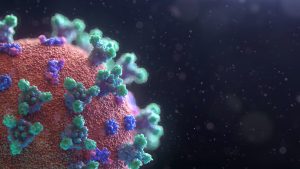
When my wife texted me two Friday nights ago that she’d had a persistent cough throughout the day, juxtaposed to the emoji for concern and/or terror, I was unperturbed. Over the course of the now close to three years into this pandemic, we’d both seen this play enacted by one another many times over. A cough, a headache, a tickle in the throat or oddly stubborn congestion, and like any typical urban, Jewish medical professionals we immediately grasped for one of our many rapid Covid tests in the closet, crossed our fingers, and hoped for the best; and were always rewarded as such—that was up until last week.
My wife continued to test negative for her first 24 hours, even as symptoms were worsening: Headache, body aches, fatigue, all to the severity that she figured if not covid it must have been the flu. Regardless of the biomedical disease label, her Chinese medical pattern was her Chinese medical pattern, so I dutifully drove to the pharmacy in Chinatown to get her what I hoped was the perfect formula. By the 48th hour she tested positive, just at around the same time she’d begin her herbs and self-quarantine. We only hoped it wasn’t too late for the baby and me.
I felt fine for another two days, playing Super-Dad, cooking all meals plus Chinese herbs, caring for the baby, and leaving meals on the floor outside of the dreaded infected room. Unfortunately, once woken in the night, our 15-month-old refuses to return to sleep without the comforts only Mom can provide. They ended up spending the night together and within another 48 hours I had a tickle in my throat so subtle that three years ago, or even three days ago I would have thought nothing of it. A mild cough that could have just as easily been the kind of mild seasonal allergy symptom exhibited by those of us lucky enough to not much suffer with seasonal allergies. Hoping against hope that maybe it was psychosomatic or even a stretch of a coincidence, but within six hours I was writhing on my bed with a 100.4 fever (not terrible), plus a cough and rather heated oppression in the chest. Still testing negative, but immediately emailed one of my mentors for a virtual consultation the following morning.
My first twelve hours were rather awful: One of the worst occipital headaches I’d ever experienced, low back pain that was reminiscent of after my Covid vaccine, and a queasy lack of appetite that is as foreign to my own constitution as it is to most common colds. Covid’s unique strength is in the sticky nature of the spike protein, “damp” as we’d coin it in Chinese medicine, obviously evidenced in its well-known cerebrovascular and gastrointestinal complications, as well as brain fog, which can all be explained by either modern psychoneuroimmunology and/or good old fashioned, Chinese medicine. The muscle aches, for example, are the excess body fluids on the surface fighting the pathogen but temporarily losing, as is apparent by the lack of sweat I was still experiencing.
My brother was my angel, kind enough to use his free time to run to Chinatown for me, pick up the formula written by my mentor, and drop it off at my building, so that I wouldn’t lose a day. Covid is the kind of disease that evolves rapidly, entering the body at one “organ level” but quickly traversing to the next if not immediately and appropriately addressed. My brother understands just enough about Chinese medicine to know this logic, so I needn’t explain to him the urgency, in spite of well knowing mine was not an “urgent” case by biomedical standards.
By this time my wife was 80% better, the baby practically asymptomatic aside from some odd eating and sleeping habits. I felt much better by my 24-hour mark, though my “pattern” did shift, as the headache and muscle aches had abated and I was left with a burning sore throat. I called my mentor for another consultation, as we had to change the formula, this time with an intention of clearing heat from the lungs. Once that was clear I was finally left with a low-grade brain fog for a few days, which was resolved with formula #3, a return to more aromatic herbs to dry the leftover fluid retention in the gut. No, I did not request my brother make any more trips to Chinatown, as I felt up to driving in myself, requesting they bring my bag of herbs outside to exchange safely on the sidewalk.
All told, it was approximately a one-week process for myself, probably a bit shorter for my wife, and a lot shorter for the baby, and I thought it all too appropriate to not share, doing what I do for a living, and this all having fallen the week before Thanksgiving.
We have much to be grateful for through this experience, first and foremost of course being our health and full recovery. While I realize the majority of the western world has been “over this” for quite some time, and the present variant is supposedly mild, I suspect the latter hypothesis to be applicable mostly to those who are on their second or third times around. For our household this was our first—we were naïve enough to believe we might even evade it—and although we managed, it was no fun going through it with a 1-year-old. Though we made it through, and to this end my primary gratitude goes to Kamwo Pharmacy, of course my brother, and Chinese medicine in general; while the western world continues to box acupuncture in as some nifty new age modality to treat muscle pains, at its inception it is the most thoughtful form of internal medicine, and all of its classical literature is more or less wholly dedicated to illnesses like coronavirus. I hope should any of you contract it in the future you’ll allow me to help first.
