
Spring
Is it Safe to Go Running Outside Now?
And suddenly it’s 70 degrees… The days are longer and next week everyone comes into the clinic with either sudden onset colds or aches and pains. Why?
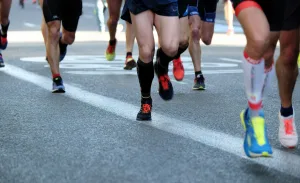
Yesterday while driving around my South Orange/Maplewood community I saw so many runners out in the streets, I would have thought a local race was going on if I hadn’t known better. It’s nice to be hyped for the warmth and sunlight, but smart to also not be the guy/girl who can’t wait to shed layers of clothing and allow the cozy but still crisp air of March to penetrate their surface through open beads of perspiration, thereby getting trapped at the body’s immunological layer, finding its way most proximally either to the lungs or the muscles. About half the runners I saw had sweaty arms and/or shoulders exposed, and if they’re not sick or especially sore in the next few days, well… good for them.
Throughout winter our “Yang Qi,” or immunological substances and anti-inflammatory chemicals nest mostly at the surface of the body, warding off cold temperatures and strong winds, and making shoveling many pounds of snow that much more exhausting, as we generally feel more energized when it is our metabolic layer, not surface, that is replete with “Yang.”
While east coast temperatures are poetically as bipolar as the default psyche of its inhabitants, suddenly jumping from 20 to 60 degrees in the span of a few days, our Yang Qi doesn’t move so quickly, especially as we get up there in years. Instead, in response to consistently warm temperatures it moves gradually from the surface, luring us into the illusory feeling that summer, if not at least spring has arrived, and we can store all the scarves, hoodies, and jackets away for the foreseeable forecast. This is false.
When open sweat pores come into contact with a breeze, the breeze bypasses the dermis. In winter or on the heels of winter cool winds are met by the immunological substances that have been subleasing space there for quite some time. They recognize one another as the enemy and battle ensues. This battle may manifest as something as simple as suddenly unusual neck or shoulder pain, or worse, they choose the immune system’s favorite organ as a battle ground, and there is cough or congestion.
Chinese medicine’s most referential text, The Yellow Emperor’s Inner Classic, clearly outlines a physiological pattern of (cold) air penetrating open sweat pores, thereby trapping fluid retention at the surface layer, which spends years trying to escape, manifesting in yellow or oily sweat that consistently stains (white) clothing, then followed years later with arthritis or other joint pains. Often considered an “astragalus pattern,” it can be treated by various herbal formulas with astragalus, or “Huang Qi” as their chief ingredient, working by transporting functional gases from the microbiome to the surface with the intention of ridding the latter of said inflammation.
This doesn’t mean be ridiculous. Enjoy the week! No need for winter coats, hats, and gloves. But scarves are a good idea, as are sweatshirts if you can handle it, and other sweater weather type attire, even if the literal number on the map suggests otherwise.
Spring Wind!
Did anyone else notice how many times in the past week the weather said something like 52 but felt more like 32? Spring wind! In the lunar calendar we are already well into spring, the season the ancient Chinese correlated with pathologies of “wind.” What does that mean?
“Wind pathologies,” in Classical Chinese, basically refers to anything that moves within the body. Think joint pains or almost any pains, also neurological tics, from Restless Leg to Parkinson’s disease, finally many dermatological conditions that traverse different body parts and seem to constantly change in shape or surface area covered. Where does it come from?
The pathology of autumn is dryness, hence all the foliage drying up and sinus issues it commonly brings. Following is the bitter cold of winter, which consolidates said climate of dryness, constricts our blood vessels, thereby offering fewer pathways for lubrication, whether to our skin, orifices, or otherwise.
Dryness, in Chinese medicine, whether manifesting as a lack of blood, lack of healthy blood, mucosal metabolic fluids, or parasympathetic neurotransmitters, can give rise to physiological symptoms that might be metaphorically described as “wind.”
Another cause can be literal wind, as it gusts down the avenues and seemingly even turns corners to blow hats off our heads and make 52 degrees feel like 32. This causes a local constrictive response in the head, which contains our autonomic nervous system, which manages a great part of vital organ function. Am I suggesting the entire body is connected and that which accosts the head can in turn accost our entire physiology? Yes. Ask anyone who’s suffered a concussion. What can we do?
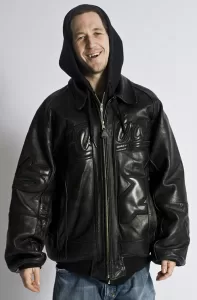
Wear a scarf. Wear a hat or a hood. Wear a hood over your hat. Wear a mask beneath the hat beneath the hood above your scarf. You don’t have to be sick or paranoid to wear a mask in the cold and/or windy months of the northeast. You can simply be protecting your many cranial nerves that traverse the face and have far-reaching physiological implications. Modern fashion is such that there are many stylish options for these accessories. With all we have already working against us—modern stress, western diet, the simple biology of aging—doesn’t it make sense to do the simple, little things to prevent or prolong the scale from tipping into Parkinson’s?
As for “wind prevention” by way of treating the root, which is to say nourishing blood and vital fluids, I have mostly the same old boring, science-based advice: Animal protein, eggs, cooked vegetables, small portions of rice or pasta, meditation, and going to sleep before 11pm. As for accessible, food-grade Chinese medicine, tea made from red dates, licorice, and/or pearl barley can also be helpful. For the spring we also recommend more sour foods, kraut, lemon, and/or vinegar with the intention of “astringing” as many of our good fluids as possible.
Lastly, happy Mercury Retrograde, an admittedly somewhat ironic salutation to those who “observe.” Remember to expect delays in transit and traffic and problems in technology and communication. Double check who you’re sending that text or email to. Accept that things will go wrong. Try to breathe. Ask people to clarify before shouting back at them. Breathe again.
(photo from a fun shoot back in 2007, one year pre-Chinese medical school!)
Spring is “Shao Yang” Season!
As I made my way this Monday through my ten-block, 2 ½ avenue walk from Penn Station to the office, the 41-degree winds whipping into my face, masquerading as 30 degrees, that lovely sweatshirt-only, spring day of the previous weekend felt like ancient history, only to return like an overdue hug on Tuesday.
Even on these open-air, warm days, I’m cynically aware of what they ares. A tease, a mere foreshadowing of the still relatively distant future, a glimpse into a climate we may or may not experience each year, and for the next several weeks one that will rear its head only sporadically, thereby confusing our wardrobes and forcing us to check the weather app daily.
Spring corresponds with the wood element in Chinese medicine, which corresponds with the gallbladder meridian, or shao yang layer of health and disease.
At their root, “shao yang pathologies,” which can be anything from gastrointestinal to neurological, emotional, autoimmune, or otherwise, are said to be caused by “dry,” or weak guts. Vulnerability in metabolism leads to inflammation that flares upwards, commonly manifesting in symptoms such as chest tightness, throat dryness, eye dryness, most dryness, headaches, etc.
“Heat above, Cold below,” as we call it, which really just means the “cold” or weak microbiome has caused substances that should have descended as stool or urine to rise in the form of inflammation and harass upper portions of the body. One of the most signature symptoms of a shao yang pathology is the experience some have of alternating heat and cold sensations. So, while we can probably blame much of spring’s recently more chaotic, unpredictable nature on global warming, there is systemic logic to it. We might even acknowledge that in spite of our ongoing environmental crisis, spring is still the only season that consistently behaves so erratically. And erratic… is shao yang. Even the “shao yang pulse,” is signified by being ever-changing. One minute it feels wiry and rapid under the clinician’s finger—the next it’s like a slippery little ball. As my teacher would say: “This person is ‘shao yang’.”
How to temper our internal and external shao yang challenges? Simple and same as always really: Warm, easily digestible foods, and early bedtimes.
Soups and stews, congees, eggs, and steamed vegetables are light on the gut. They should generate healthy metabolic fluids and are less likely to create inflammation. This will address the “cold below.” As for the “heat above,” early bedtimes will modulate neurotransmitters and maximize the kind of organ recovery that can be attained only through a good night’s sleep (and/or Chinese herbs).
Err on wardrobe for the calendar more than the forecast, obviously within reason. Our bodies are still considered “cold” from the half year of cold, so all the youthful “heat pathologies” walking around outside in cut-off belly shirts cut low again on top will be more vulnerable to viruses.
Exercise should be consistent, but moderate. Regular enough to quell the heat above, but mindful to not sweat so much as to weaken the cold below. If you’re aiming to have the beach body ready for summer, the best way is by avoiding gluten, dairy, sugar, and raw foods, along with mild core workouts.
Finally, the wood element of spring is most supported by the sour flavor, so this is a good time of year to add foods like lemon and vinegar to your daily intake. Although they are uncooked, pickled foods, such as sauerkraut or kimchi are good to have alongside your warm meal, as they help to prevent the “shao yang stomach.”
Happy Shao Yang Season, everyone!
The Physiology of Wildfire Smoke (in NYC)
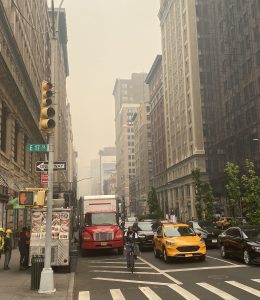 While the sepia tones and brush aromas from this week’s Canadian wildfires’ spillover to the northeast might have looked great in a photograph, or smelled enticing in 1% of its dosage (if seated by a campfire with marshmallows), on the ground in real life it was daunting, and for many systemically disruptive. Personally, I was outdoors plenty, both on my commute and on my break at Union Square farmer’s market, albeit with a mask on, and thankfully did not experience symptoms.
Chinese Medicine nicknamed the lungs “the delicate organ,” which really they are not—in fact quite the opposite—however what is meant by this is their being most and primarily vulnerable to external pathogens. Toxic fumes are an external pathogen. They dry the sinuses and respiratory microbiome, which can bring with it symptoms such as chest oppression, frontal (or maybe temporal) headaches, and of course, dryness. Or as my wife and I learned, if you are a 2-year-old trapped indoors as a result, rabid, recurring cases of cabin fever.
The formula everyone needed at least one day of at home this week was “Xiao Chai Hu Tang,” or “Minor Buplureum (root) Decoction.” It includes buplureum root to clear heat from the upper body by increasing circulation downwards; pinellia root to dissolve accumulation in the chest and sinuses; scutellaria root to clear heat specifically from the lungs; ginseng to generate healthy fluids in the stomach to protect it from the bitter nature of the other herbs; ginger to warm the stomach for a similar reason; and finally licorice and red dates to generate healthy fluids in the stomach, chest, and central nervous system.
It’s no wonder this is one of the most commonly prescribed herbal formulas in Chinese Medicine. Nevertheless, it should almost always be modified according to the individual; especially those with low energy, low appetites, and/or aversions to cold weather. Typically, these were the body types I saw most impacted by the air pollution this week. Frontal headaches, dryness in the throat, and chest oppression, as a result of the external toxicity exacerbating their pre-existing internal toxicities as a result of metabolic dysharmony. Not to worry, as my father always said. There’s hope.
If any symptoms are lingering and you are not presently coming for acupuncture or taking herbs I would recommend any or all of the following:
- Hot mint tea, maybe with honey, to open the chest, cool, and lubricate the sinuses
- Asian pears, or fresh pear juice, also to lubricate the lungs and sinuses.
- Rice congee with chopped up pears, red dates, some honey and cinnamon—YUM—to generate healthy fluids in the respiratory and gastrointestinal microbiomes.
- Gentle exercise, such as qi gong, yoga, or deep breathing. NOT… outdoor running, for the love of God.
- If nothing else, just stay hydrated, preferably with room temperature or hot water. Cold drinks constrict blood vessels, which obviously then traps local inflammation.
These are great treatments to treat only the branch of the problem, as its root cause is of course Republicans.
Thirst, Sweat, & Urine: What is Normal?

In contrast to the requisite ruling out of red flags by most nurses in conventional medical settings, the reason Chinese Medical practitioners ask about almost every system in your body is because we are diagnosing based on complete patterns—not just symptoms.
For example, if someone comes in for acid reflux, we cannot know their prescriptions until we know how often they urinate or poop, what each one is like, whether they experience headaches or dizziness, which part of the head they get their headaches in, how is their appetite, how thirsty they are during the day versus in the evening, etc. etc. This is because we are one of the only true forms of holistic medicine.
So, what is normal?
A normal amount of urination is approximately 6 times a day (yes, this includes waking at night). Much less than that and you are likely either retaining, or not drinking enough water in the first place. More than 6 indicates either a weakness in the urogenital microbiome, or excessive inflammation in the urogenital microbiome, which over time can lead to local weakness by putting strain on it. The remainder of the intake questions will determine which of the two is the case.
People should sweat, but not excessively so. Chinese Medicine is critical of HIIT or marathon training, hot yoga, and sauna therapy in most cases. While these might all feel great in the short-term and/or be proven to offer certain isolated benefits in the short-term, we believe they ultimately deplete the body’s healthy metabolic fluids. On the other hand, never sweating (exercising) at all is obviously just as harmful.
While some people barely break a sweat even when they exercise, others are drenched by the time they finish their morning commute, especially triggered by certain climates or seasons. The former can either indicate body fluid depletion or a malfunction of the immunological “qi.” The latter can either indicate inflammation, fluid retention, or also a malfunction of the immunological “qi.” This is where diagnoses and prescriptions get tricky.
Many western doctors have now begun to recognize the health benefits of the Chinese herb, astragalus, which on one hand is great. On the other hand, their recognition by way of empirical studies poses the challenge of having no comprehension of Chinese Medicine. If you give astragalus to the former example of a “cold-body person” with a simple immunological malfunction they will feel amazing and sing your praises. If you give it to someone with both immunological malfunction AND fluid deficiency it will do almost nothing. Worse, if you give it to a “hot-body person” with inflammation and fluid retention they will feel much worse.
Finally, it is normal to be thirsty, for 6-9 cups of water per day. A lack of thirst tells us there is fluid retention in the microbiome, signaling to the brain that it’s got plenty of liquid down here—no need to hydrate! This is dangerous, and better to fake it ‘til you make it in acquiring thirst. On the other pole are those who are ravenously or insatiably thirsty, which informs us of inflammatory heat in either their respiratory microbiome, gastrointestinal microbiome, or both, drying out their fluids. As always, the most complicated patterns are those who are generally unthirsty followed by sudden bouts of desperate thirst. This is a combination pattern that requires more thought, trial, and error.
I hope this was interesting and informative. One of western medicine’s shortcomings is its reliance on tests and labs to determine whether we are healthy or normal. While these are undeniably valuable, they tell only part of the story, which is why so many diseases get caught too late. Chinese Medicine is more brilliant in its neurotic recognition of pathologies in any abnormality, any imbalance, as something to rectify before it spirals into disease.
