Skin
Herbal Profile: Chi Xiao Dou (Adzuki Beans)!
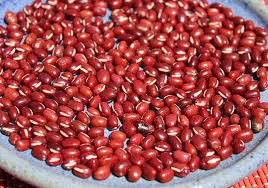 In Mexico black or refried beans are most popular. Caribbeans eat black peas, Indians more lentils, and of course Americans prefer the sweetest of all, baked beans. In China though, adzuki beans are more than just a delicacy—they are an important ingredient in our classical pharmacopeia, often used to treat conditions of the intestines or skin, the latter frequently manifesting pathologies of the former, thereby informing us of the underlying pattern.
For example, while redness around the forehead points to suspected biofilms of the intestines, acne that falls more around the jawline, chest, or upper back suggests biofilms of the stomach. Chi Xiao Dou, or Adzuki Bean, can be used to treat either, provided it is appropriately dosed within the context of an accurate holistic formula. It is also useful for eliminating or minimizing liver spots, pus accumulation around the eyes, and other random skin discolorations.
Listed in our texts as sweet, sour, and neutral in properties, its neutrality allows it to diffuse dampness in the body that is either cold/inhibitory or hot/excitatory in nature. Its sweetness encourages the body to generate a healthy amount of fluids, and its astringency obviously helps our body to hold that which is leaking, or sinking. It is said to gently promote blood circulation between the bowels and the skin layer.
This might explain why it comprises half of the formula, Dang Gui Chi Xiao Dou Tang, most commonly prescribed to treat certain types of hemorrhoids and skin issues around the buttocks.
If the shoe doesn’t fit—that is if this formula does not fit your pattern, but you still suffer with chronic hemorrhoids, it is advisable to regularly consume adzuki beans with your meals to take advantage of its biofilm dissolving properties. By relieving intestinal vessels of inflammation this should take pressure off of the rectum.
Adzuki beans go well with rice and/or Latin or Asian dishes, also within rice congees plus a boiled egg, providing additional protein to an otherwise dish of just white rice. If you don’t love the taste as much you can also do what I do for my daughter, which is mix the adzuki beans with baked beans as a side dish on hamburger and hotdog nights.
To treat skin conditions Chi Xiao Dou is generally paired one way or the other:
- With the aforementioned, Dang Gui to not only help to generate red and white blood cells, but also to courier them to the surface to nourish and lubricate the skin.
- With more bitter, inhibitory, heat clearing medicinals, such as rehmannia root to mitigate the body’s inflammatory response, known to flare upwards in the form of jawline or upper back acne (“Backnee”).
If you think adzuki beans might help you or a loved one reach out—or just go to the store, purchase, and cook them up! Preferably organic, as inorganic legumes can be particularly vulnerable to chemicals and pesticides. Any recipe or preparation questions, let me know!
Alternative Acne Treatments
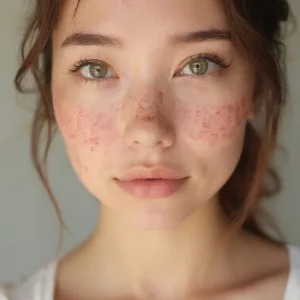 Acne has many faces. Why does it land on us? Our faces and backs, upper or lower back? Why for some of us is it itchy, while not for others? For some it is painful. Some women get flares on their cycle, or just after. Why?
The Jue Yin-Yang Ming mechanism is one of the most important connections in Chinese medicine. It dictates that our body must have enough healthy fluids and inhibitory substances in reserve, such as estrogen, dopamine, etc., to mitigate inflammatory heat from flaring upward in the body, whether vertically up (to the face and head) or simply upwards from the “organ layer” to the skin.
For those not prone to “heat pathologies” (approximately half the population) this “flare” will likely manifest in different ways—if it does so dermatologically the skin is less likely to be red and/or angry.
If you’re like myself the skin is likely to turn red. If there is itchiness it indicates damp fluid retention (often sebum oil) trapped on the surface—the itching being its attempt to vent (follicular hyper-keratinization)—and/or some central nervous system dysregulation, i.e. a potential stress component. The reason scratching ultimately makes things worse is because the manual aggression ends up pushing the fluid retention a tad bit deeper beneath the surface, no doubt to resurface soon thereafter. Although scratching to bleed is not advisable, it does generally provide longer-lasting relief via its ability to vent some of the pathogenic fluids within the blood. If there is pain at the site, there is probably some degree of local blood stagnation. This often coincides with the week leading up to one’s menses, whereas symptom flares on the heels of one’s menses points more to “Jue Yin” fluid and/or blood deficiency.
Dermatologists often recommend Spirinolactone, which works by stopping aldosterone from signaling the kidneys to reabsorb sodium. This might be a wonderful Band-Aid for some, but unfortunately over time can cause issues as sodium is an essential mineral for transporting nutrients across cell membranes, also for regulating blood pressure. This might explain why two of its most common side effects are dizziness and gastrointestinal issues.
In the treatment of acne it is first important to rule out itching—whether there are oily pathogens beneath the surface and/or an emotional component, that needs our attention. Most important is the Jue Yin-Yang Ming axis. How much heat must our acupuncture and herbal medicines stop from flaring to the person’s skin and how much blood and/or inhibitory substances must we generate to prevent further flares? Dosages or points might be modified on a weekly basis. Striking this prescriptive balance is the key to optimize clinical outcome.
As for self-care, it is advisable in almost all skin conditions to go off dairy for the lifecycle of a red blood cell, or 120 days. Dairy contains the hormone, IGF-1, which increases sebum production. Many people can resume in moderation afterwards. Red meat can go either way as it helps to generate blood and fluids, but can also generate bodily heat. Where one falls along the Jue Yin-Yang Ming imbalance will decide how much steak is advisable. As far as protein goes eggs, fish, and tofu are ideal, as they don’t generate as much heat in the body.
Chinese Medical Dermatology
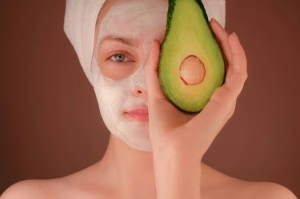 November is skin care awareness month, and although it is not a subject I discuss often in my blog or instagram, dermatology makes up a huge part of Chinese medical literature. As always, I hope and believe people will consider us to treat the actual root (not “the root” that certain pharmaceuticals’ TV ads claim to) of any skin issues that might befall them.
The first time my daughter had Covid she recovered quickly, as most babies and toddlers do, but it left her with some atopic skin issue on her face. We applied some topical creams that had been helpful with issues in the past, but to no avail. I consulted a teacher of mine, who recommended a formula we don’t generally think of for dermatology. It would be more categorized—that is oversimplified—as an immunological treatment, containing all the usual suspects for an exterior virus: Ephedra, ginger, wild ginger, cinnamon branch, etc.
My apologies for the cliche, magical resolution anecdote, but it does happen and did so here, probably and partially because of how young and fundamentally healthy she is. Her skin cleared up within 24 hours, to never return. We didn’t even finish the recommended dosages.
In Chinese medicine the liver is said to connect to our tendons, the stomach to our muscles (which is why proper diet can potentiate strength training), kidneys to the bones, and lungs to the skin. One way or another, most skin issues can be traced back to either our lungs, or their “paired organ,” the large intestine. In the case of my daughter, it was obviously the former.
There are 2 fundamental reasons why our skin erupts. Either inflammation trapped somewhere in the body is seeking an escape route, or a lack of blood and vital substances in the body are failing to reach the surface to lubricate and/or nourish our proverbial “exterior.” To assign the same prescription to both patterns based on a biomedical label would be ludicrous.
Cases of the former generally present as hot, red, itchy, and angry, whereas the latter are paler in color, dryer in texture, and more troubling cosmetically than anything else. Nevertheless, cosmetics matter. We’re all entitled to nice skin—more importantly to the quality and quantity of blood that belies it.
Hot and red, itchy skin generally benefits from a (closer to) vegan diet, plus bitter and anti-inflammatory herbs and foods, such as dandelion greens, kale, green tea, and a hiatus from alcohol. Acupuncture points are used to clear heat and fluid retention. We might also bleed particular vessels near the sites of eruptions to help move stagnant blood perpetuating the vicious cycle. Herbal medicines might revolve around gardenia fruit and scutellaria bark.
Pale, dry skin earns the opposite recommendation: Meat, beef, and more meat, bone broth, eggs, and plenty of sleep to help restore and regenerate blood. Black tea instead of green tea, the latter of which might further weaken the stomach with its bitterness; and moxibustion more than acupuncture to help warm and strengthen the organs. Herbal medicines likely revolve more around angelica and peony root, both of which can also be instrumental in reducing menstrual cramps. In both patterns, abstinence from dairy is advisable.
Finally, and as always, important to get your annual skin cancer scans with your dermatologist to rule out anything that is better taken care of with modern technology.
What do Gout, Varicose Veins, & Neuropathy Have in Common?
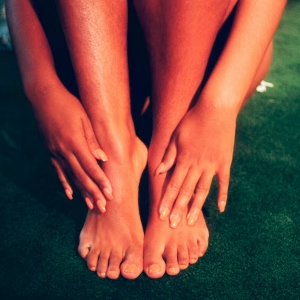
What do neuropathy, gout, and varicose veins have in common? In western medicine not much, aside from being awful inconveniences, ranging from sources of extreme pain to discomfort and/or a significant cosmetic preoccupation.
For neuropathy you go to the neurologist, for gout to the rheumatologist, and for varicose veins you might see your primary care, who will likely refer you to a vein specialist. The neurologist may or may not inquire about venous circulation, and it is very unlikely the rheumatologist will ask about numbness or tingling in your feet.
But from a Chinese medical perspective, all of these conditions fall under the heading of impaired circulation in the lower extremities, caused by either weakness, inflammation, or both, leading to a misdistribution of bodily fluids, which exacerbates the former, which exacerbates the latter, and so on.
They are different in specifics only as a result of individual genetic proclivities—in fundamental mechanism they are the same. Someone with a colder bodily constitution—prone more to hypothyroid or hypotension, will be more susceptible to varicosities, whereas people with warmer body types—prone more to hyperthyroid or hypertension, will be more susceptible to gouty arthritis. The former are well advised to eat plenty of lamb and red meat, while the latter might consider being mostly vegetarian.
Neuropathies can go either way in the way of temperature, as they are more telling of issues with fluid metabolism. We find that neuropathy patients are either unusually thirsty, unusually not thirsty, or they urinate excessively or not enough. In either case, their body is clearly weakened to some degree, and it is imperative they get to sleep by 11pm, so nerves can properly regenerate.
While inadequate urination obviously leads to fluid retention which can clog neurological pathways and impair circulation, excessive urination can dry vessels of their healthy synovial fluids, causing us to feel parts of our body we previously took for granted as being unaware of.
Holistic medicine should modulate the organ function that is causing the improper excretion of fluids in addition to treating local blockages causing pain or discomfort. Easier said than done of course, as such conditions generally took many years to form, plus might be aggravated by present challenges, such as diet, stress, or medications being used to treat other conditions. However, through a course of treatment of acupuncture, herbal medicines, and dietary modifications, one should see improvement over a proper course of treatment, 120 days.
Please be discerning in your choice of clinician. If you see someone—whether east or west—who is failing to assess or treat beyond the immediate site of pain or discomfort, I would highly recommend getting a second opinion.
Thirst, Sweat, & Urine: What is Normal?
In contrast to the requisite ruling out of red flags by most nurses in conventional medical settings, the reason Chinese Medical practitioners ask about almost every system in your body is because we are diagnosing based on complete patterns—not just symptoms.
For example, if someone comes in for acid reflux, we cannot know their prescriptions until we know how often they urinate or poop, what each one is like, whether they experience headaches or dizziness, which part of the head they get their headaches in, how is their appetite, how thirsty they are during the day versus in the evening, etc. etc. This is because we are one of the only true forms of holistic medicine.
So, what is normal?
A normal amount of urination is approximately 6 times a day (yes, this includes waking at night). Much less than that and you are likely either retaining, or not drinking enough water in the first place. More than 6 indicates either a weakness in the urogenital microbiome, or excessive inflammation in the urogenital microbiome, which over time can lead to local weakness by putting strain on it. The remainder of the intake questions will determine which of the two is the case.
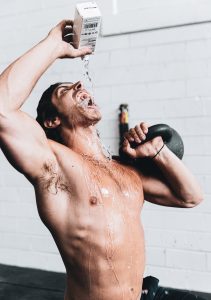
People should sweat, but not excessively so. Chinese Medicine is critical of HIIT or marathon training, hot yoga, and sauna therapy in most cases. While these might all feel great in the short-term and/or be proven to offer certain isolated benefits in the short-term, we believe they ultimately deplete the body’s healthy metabolic fluids. On the other hand, never sweating (exercising) at all is obviously just as harmful.
While some people barely break a sweat even when they exercise, others are drenched by the time they finish their morning commute, especially triggered by certain climates or seasons. The former can either indicate body fluid depletion or a malfunction of the immunological “qi.” The latter can either indicate inflammation, fluid retention, or also a malfunction of the immunological “qi.” This is where diagnoses and prescriptions get tricky.
Many western doctors have now begun to recognize the health benefits of the Chinese herb, astragalus, which on one hand is great. On the other hand, their recognition by way of empirical studies poses the challenge of having no comprehension of Chinese Medicine. If you give astragalus to the former example of a “cold-body person” with a simple immunological malfunction they will feel amazing and sing your praises. If you give it to someone with both immunological malfunction AND fluid deficiency it will do almost nothing. Worse, if you give it to a “hot-body person” with inflammation and fluid retention they will feel much worse.
Finally, it is normal to be thirsty, for 6-9 cups of water per day. A lack of thirst tells us there is fluid retention in the microbiome, signaling to the brain that it’s got plenty of liquid down here—no need to hydrate! This is dangerous, and better to fake it ‘til you make it in acquiring thirst. On the other pole are those who are ravenously or insatiably thirsty, which informs us of inflammatory heat in either their respiratory microbiome, gastrointestinal microbiome, or both, drying out their fluids. As always, the most complicated patterns are those who are generally unthirsty followed by sudden bouts of desperate thirst. This is a combination pattern that requires more thought, trial, and error.
I hope this was interesting and informative. One of western medicine’s shortcomings is its reliance on tests and labs to determine whether we are healthy or normal. While these are undeniably valuable, they tell only part of the story, which is why so many diseases get caught too late. Chinese Medicine is more brilliant in its neurotic recognition of pathologies in any abnormality, any imbalance, as something to rectify before it spirals into disease.
