
Anxiety
The 5 Elements of Chinese Medicine for Knicks-Mania

For the first time in 53 years and the first time in my life it looks like the Knicks can do it. I never thought this would happen. Even in the past few years, as they improved and made progress in the playoffs, my non-expert understanding was that we were a second-tier team. We’d make some runs, it’d be exciting and interesting for the first time in a quarter century, and that was enough to stoke the passion of hometown fans. But we’d always fall short of the top tier.
Now here we are, atop the mountain, two games to win to be considered the best, and I’ve already lost sleep over it. Like a kid on Christmas, but instead of sugar plums, visions of dancing in the streets with strangers, causing a ruckus, crying tears of joy in embrace with old friends who I watched the Knicks of the 90’s with as a kid.
It only happened once, but last week I tossed and turned for hours, intermittently frustrated but also laughing at how ridiculous I was, a victim of my own “heart fire,” an over-stimulated central nervous system, hyper-secretion of serotonin, and/or cortisol. So how do we treat this?
“Excessive joy,” as it is referred to in the Yellow Emperor’s Inner Classic, which sounds almost paradoxical. Why should any amount of joy be labeled “excessive?” What it means is over-excitement. Excessive indulgence, as in intoxicants or sexual pleasures, manic behaviors, and/or over-celebration, as in if your team should win a title for the first time in half a century. Of course, keep in mind for purposes of practicality, that none of these overt examples are requisite to induce heart fire. Some of us are just more so inclined—more prone to anxiety, insomnia, ruminating thoughts, or panic. For heart fire patterns, the following is advisable:
Avoid spicy foods, which induce upward surging of chemicals, the last thing they need. Prioritize bitters: green tea, coffee, and cooked leafy greens. Herbal formulas must be customized by a licensed clinician, but will revolve around medicines such as coptis root, gardenia fruit, scutellaria root, and/or rhubarb root. Keeping in mind that excessive consumption of bitter foods and medicines can weaken metabolism. It can be mitigated by exercise and foods that are mildly bland or sweet, such as yams, rice, and steamed vegetables.
Conversely, what if the Knicks lose? Then the stages of grief, beginning with anger, or “liver fire.”
Liver fire—that is uncontrollable fury—can be calmed by consuming sweets. Not sweet by modern American standards, although plenty of us have reached for junk food in moments of stress and can attest to having felt temporary relief. Instead, foods like rice or yams, even breads, butter, honey, or fruits can behave accordingly functional and are advisable for PMS cravings. Herbal formulas revolve around licorice, red dates, longan fruit, and/or rehmannia root. Keeping in mind that excessive consumption of sweet foods can also weaken metabolism by creating fluid retention in the gut. It can be mitigated by exercise and foods that are mildly bland or acrid, such as ginger, cooked onions, and steamed vegetables.
Finally, we have grief. Logically the opposite patho-mechanism to heart fire, grief causes vital substances to plummet in the body. Fluid metabolism is impaired as a result and we feel heavier, lethargic, depressed if you will. The body requires the opposite of bitter: Spicy, when appropriately dosed, can help metabolize fluids and bring our energy back up. Ginger, garlic, onions, turmeric, and even moderate doses of chili pepper. Herbal formulas might revolve around dry-fried ginger, Sichuan peppercorn, aconite, cinnamon, or ephedra. Keeping in mind that excessive consumption of “acrid” foods can weaken metabolism by dehydrating the gut’s mucosal fluids and digestive enzymes. It can be mitigated by exercise and foods that are mildly sour or sweet, such as yams, rice, and lemon water.
Clearly, and unlike my daughter, we are rooting for BITTER! Sleepless nights, heart palpitations, and a touch of anxiety, are symptoms any die hard Knicks fan would sign up for a few days of in exchange for a title. So get your green tea, kale, and dandelion greens ready. GO KNICKS!
Why Would You Have Anxiety & Diarrhea?

The question shouldn’t be why WOULD you have anxiety and diarrhea? The question should be why WOULDN’T you have anxiety and diarrhea?
The cause of loose stools can be over complicated and analyzed, replete with fancy biochemical terminology, citing the benefit or particular bacterial strains, such as Lactobacillus rhamnosus GG, Saccharomyces boulardii, and Bifidobacterium, but from a Chinese medical perspective it comes down to one of two fundamental pathologies, and/or a combination of the two.
Either we have too much unhealthy bacteria in the gut (“dampness”), putting excess strain on our stomach, causing excess poop—or not enough good bacteria (“dryness”), which leads to the production of more inflammation than nutrients and again, excess poop. Over time, one pathology inevitably engenders the other and we’ll almost literally poop our brains out, as the gut produces most of the body’s serotonin, which acts as a signaling molecule to the nervous system.
The modern coined “Gut-Brain Axis,” first outlined by Zhang Zhong Jing as “Tai Yin” system in his masterpiece, Discussions on Cold Damage 2,000 years ago—it stands to reason that we should feel some type of emotional dysregulation as the cause or result of chronic diarrhea.
Two of the best ways to manage this are, you guessed it! Diet and exercise!
Warm, cooked vegetables and moderate protein strengthen the microbiome and exercise unburdens it, specifically and especially strength training, as the muscles classically exist in a mutually interdependent dynamic of engenderment with the pancreas and stomach. Strong muscles can equal a strong gut (though there is such a thing as “too strong,” where a person’s weightlifting addiction over-burdens their organs’ fluid and bacterium reserve), or vice versa.
When lifestyle doesn’t seem to do the trick, Chinese medicine has a great deal to offer.
For a gut that is overburdened with damp, harmful bacteria, we offer herbal formulas that revolve around Poria Mushroom if there are accompanying heart palpitations or insomnia, Atractylodes if there are accompanying thirst or joint pain, Magnolia Bark and/or Bitter Tangerine for bloating and/or chest tightness, or Pinellia root if nausea, thirst, or dizziness.
For a gut apparently deprived of healthful bacteria we recommend eating more white rice, especially if the patient is prone to loose stool. Chinese herbs include licorice root if there is acid reflux or low blood pressure, ginseng if there is thirst or fatigue, wheat for anxiety and depression, or Gypsum Stone if the person feels over-heated, manic, and craves cold drinks.
When bodily fluids plummet, as in diarrhea (or excessive urination, excessive menstrual bleeding, excessive any form of loss) it gives rise to the Chinese metaphorical concept of “Wind,” that is too much heat and/or energy (Yang) rising to the head as a result of a lack of fluids (Yin) in the lower portion of the body. This “Wind” can manifest in any way, from unsettling symptoms of the gut, chest, head, or mind. Anxiety is a proclivity near and dear to me, and throughout my thirties (combined with organic maturity) Chinese medicine helped me enormously. Please reach out if you or anyone you know is dealing with this familiar pattern!
Chest & Breast Pain & Chinese Herbs

Geography is significant in Chinese medicine. Not just the label of a symptom or disease, but its location, for acupuncturists, strongly informs our diagnosis.
When I ask patients whether they experience chest pain or tightness I am not necessarily concerned for some respiratory or cardiovascular disease. The chest is the “domain of Shao Yang,” “Lesser Yang,” that is relative to the head, neck, and face, described more often in our literature as “Tai Yang” or “Yang Ming,” respectively
The Shao Yang system harbors the end result of our body’s “pivot,” from metabolic production to the distribution of vital substances around the body. Soreness around the ribs, tightness in the chest, cough or even shortness of breath can be a result of our organs failing to produce adequate substances to engender functionality above.
The textbook pulse quality at the radial artery in such patterns is a “wiry one,” illustrating a microcosm of the fluids in our torso beginning to stretch thin. Needless to say, the best way to avoid this mechanism is with a diet that produces ample fluids and exercise to clear heat. If you don’t succeed, and eventually none of us do, what is the flavor of your chest pathology?
Sharp pain that is better with exercise, first of all obviously bodes well from a biomedical perspective, but also indicates some subjective blood stasis in the chest—most often a lack of blood movement due to an inadequate quantity of metabolic fluids giving rise to inflammatory heat, which tends to dry out the diaphragm and everything that includes it. Best remedies are moderate exercise and deep breathing. Best acupuncture points are Pericardium 6, which fires into the brain’s insular cortex, subsequently down the vagus nerve. Herbal formulas include platycodi bark, immature tangerine peel, and peony root.
If the chest feels hot, it suggests further aggravation of inflammatory heat, which might include sequelae such as insomnia, anxiety, and/or irritability. This may be difficult to treat with acupuncture alone, although local points such as Ren 17, Lung 1, and Liver 14 may help. Herbal medicine will be more effective, including the very bitter coptis root or gardenia fruit to additionally clear heat from the stomach, otherwise prunella spike, lily bulb, and/or if there is notable phlegm in the lungs, trichosanthis, or “gua lou pi.”
If your chest pain is worse after eating it clearly suggests some degree of food stagnation—that is indigestion. Steamed and bland foods are advisable until it resolves, as is drinking Pu-Erh tea, and performing manual stomach circles around one’s abdomen.
Best acupuncture points are Large Intestine 4, which fires into the brain’s periaqueductal gray matter, then into the abdomen. Herbal formulas include magnolia bark, rhubarb root, tangerine peel, ginger, and bupleurum root, to comprise the majority of “Da Chai Hu Tang,” or Major Bupleurum Decoction. Alternatively, if one is more prone to diarrhea and lack of appetite, more advisable would be the simple, four-ingredient digestive aid, “Li Zhong Wan,” or Regulate the Middle Decoction, containing ginseng, dry fried ginger, atractylodes root, and licorice.
Persistent chest pain should be taken seriously, especially if coinciding with shortness of breath, and one should see their medical doctor to rule out any danger. Once structural ailments are ruled out come see us to address the root of the issue!
Chinese Medicine on Fainting, Dizziness

A friend of mine recently expressed having experienced great bouts of dizziness and fainting during the third trimester of her last pregnancy, which was in the dead of summer and was thus not surprising. I felt bad to hear of her struggles, but grateful that it inspired an idea for a new entry, on how Chinese medicine views fainting and dizziness, whether in pregnancy or not, and how we can treat or prevent it.
As with any Chinese medical diagnosis, the specifics get complicated, but we can still relatively easy to simplify into a couple of broad strokes. With any manifestation of dizziness, whether orthostatic, vertigo, passing out, or anything else, we are considering patterns of either blood deficiency, dampness, or a combination of the two, the latter of which obviously being the most difficult to treat. The final one is where your toddler at home forces you to “dance” with her around the house by spinning endlessly, for which there is no cure.
Blood Deficiency: More common in vegans, vegetarians, and pescatarians (most likely descending order), more common in women (especially while pregnant), the elderly, or anyone on long-term medications, which compromise the body’s absorption and capacity to produce blood. There is either a lack of cerebrovascular fluid or its flow and the head becomes faint.
Recommended treatment is herbs and moxibustion (acupuncture not as effective here), red meat or eggs, and earlier bedtimes.
Dampness: More common with obesity, more common in men, and/or people who consume a lot of alcohol, sugar, dairy, or raw foods. The microbiome grows congested with fluid retention, so the pathway by which our cellular energy carries healthy fluids to the brain is obstructed. “The clear yang qi cannot rise,” as we say, and our clarity or stability suffer.
Recommended treatment is minimizing all of the aforementioned foods, herbal medicine for 1-3 weeks to purge fluid retention, and acupuncture, especially along the vertigo line along the scalp located directly above the top of the ears. Note, this point will not be as effective on blood deficiency patterns, who are suffering a pattern of “deficiency,” not “excessive damp,” which responds better to aggressive manual treatment. As for self-care, drink hot ginger tea and black teas until symptoms subside.
Combination Blood Deficiency/Dampness: This is most common in pregnant women and very difficult to treat, because to nourish blood we must generate fluids, but to resolve dampness we must purge it. Not to mention the fact that we must be careful with purging fluid retention in pregnant women, since the fetus is ultimately a form of fluid retention—albeit an adorably magical one.
Dizziness and vertigo are serious conditions, not generally life threatening, although potentially dangerous when leading to the physical risks that accompany fainting. As always, Chinese Medicine can have much to offer in the way of hands-on treatment, internal medicine, and recommended self-care.
When in doubt: red meat, eggs, ginger tea, good rest, and steamed vegetables for the dampness.
Mercury Retrograde! The Fall 2022 Version
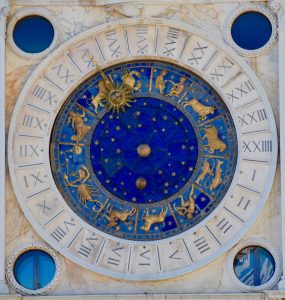 Just a friendly heads up, fair warning, from your local subscriber to (almost) all paradigms off the beaten path and/or beyond the five human senses: Another Mercury retrograde is upon us, to officially begin this coming Friday, September 9th; but for those of us such as myself, born under a Mercurial sign, the effects of its “shadow” and prior “pre-shadow” phases have already reared their heads around many facets of life. This will continue for the rest of September.
When the planet Mercury is in retrograde the things most known to suffer are travel, communication, and technology—recall October, 2021, when all of Facebook and Instagram collapsed and blacked out for a day—though my personal experience is just an overriding theme of carelessness and misfortune that can lead to a whole litany of problems.
For example, while mercury is retrograde I am more likely to roll an ankle, drop and break a glass, lose my wallet, or tell someone to “F off!” The latter of which I’m confident has become less frequent with age and maturity (and the astrological awareness to, take a breath—it’s just mercury)…
This weekend my brother witnessed a road rage incident on the upper east side where two drivers got so angry at one another that they took turns ramming each other’s cars as if in a video game until finally jumping a curb resulting in a collision on 2nd Avenue. Fortunately, no one was hurt. And while confrontations obviously happen year-round, I couldn’t help but flag such an extraordinary instance as partially exacerbated by the stars’ misalignment, hypothesizing: “If only one of the two combatants was more astrologically aware, he might have taken a breath and turned the other cheek (or wheel as it were) and avoided the legal, financial, and medical issues caused. For the month to come, try your best to pause before reacting.
For my part thus far, we’ve had last minute babysitter cancellations, patients arriving later than ever (you’re all forgiven!), my bed frame broke for no reason other than wear and tear, our freight elevator was down all week, as is our cable at home (grateful it happened after Serena’s match). When mercury is retrograde we should do our best to just go with the flow of such conditions, and avoid making any major life decisions or signing contracts until our perception—that is our communication with the outside world is more lucid.
The nice thing about mercury retrogrades is they are generally times when people from our past—hopefully not detested ex’es—either randomly reach out to connect or run into us randomly in public. Such “coincidences” are common, which can be fun and offer somewhat of a silver lining to these otherwise frustrating, chaotic few months of each year.
Of course, astrology is only an interest of mine, not remotely my field of expertise. To dive deeper I recommend The Inner Sky by Steven Forrest, or at least this ASTROSTYLE ARTICLE on how to mentally prepare and approach this upcoming period. Alternatively, alternative medicine is another useful coping tool for the stress that comes with astrological storms. Even if just harmonizing treatments, down-regulating our nervous system, or releasing our back and shoulder muscles, outside support is always advisable, and available. Please just give yourself an extra five minutes to get to your appointment 😊
