Stress & Anxiety
The Nuance of Positive Thought
 As many of you know, I suffer from congenital gout disease, inherited from my father, surely exacerbated by growing up on an American diet, in addition to my own part of culpability in adolescent self-destruction. Thankfully, it is under control with an Eastern diet and medicine, a victory I take great pride in.
Between the winter holidays I am as guilty as many of pushing the over-indulgence envelope (relative to my own standards), and one night last week, as our toddler was giving us a hell of an evening in resistance to sleep, I experienced some pain in the distal inter-phalangeal joint of my big right toe (always the culprit, interestingly located on acupuncture’s meridian that corresponds with the pancreas!). It was the perfect storm of parenthood physiology: The body needs twice as much rest and self-care, and is allotted half (if you’re lucky). Needless to say, I was worried, as we all are when our Achilles heels rear their heads, that this would “turn into something.”
Because of said toddler insubordination, the subversive from within, plus an early workday the next morning, my wife and I had already conceded a good night’s sleep. Instead, just to unwind, we put on our latest favorite show, I soaked my feet in hot epsom salt water for 20 minutes, during which I needled points on my left hand to treat my right foot (a particular style and technique many of you have suffered through at my hands, no pun intended).
The next morning I woke up tired, only moments before my daughter did, insisting, requesting, yelling, and crying, offering me no moment of reprieve or transition into consciousness (it truly never ends) as I got everything ready for the day. I was tired. My head had that subtle pounding to it that heads have after going down too close to midnight and/or waking too early. I felt irritable and frustrated. BUT… my toe was pain-free!
When we are exhausted or irritable about something or someone, it can be challenging to focus on the positive—look at the bright side instead of the hole in the donut. I spent the day reminding myself, each time I got annoyed or felt resentful, of my right foot, my big toe, how much worse that could have gone, what it could have meant for the week to come, and how big of a disaster I avoided. Not to mention that my daughter did have pre-school the next day and the weather was nice! There have been instances in the past where my joint pain worsened, school was out, I was on full-time Dad-duty, and the weather was awful. All considered, I was very lucky. Sure, I was tired and the day wouldn’t feel or probably go as I’d planned or hoped, but I repeatedly made an effort to return my focus to that toe, and all the things that had gone right.
Patient sometimes come in and apologize for telling me everything that’s still wrong when overall they’re doing much better and so many things are positive, and I remind them that my office is the place to focus on the negative. Apprise me of every imperfection as it aids in the diagnostic process in our aim for physiological optimization. In the remaining 23 hours of every day though, try to focus on that healed part of you that was previously headed in a drastically different direction. I understand it’s not always that easy—the negative is not always as simple or temporary as a bad night’s sleep, a mild headache, or argument. For such instances I extend my sympathy and support.
Chinese Medicine on Fainting, Dizziness
A friend of mine recently expressed having experienced great bouts of dizziness and fainting during the third trimester of her last pregnancy, which was in the dead of summer and was thus not surprising. I felt bad to hear of her struggles, but grateful that it inspired an idea for a new entry, on how Chinese medicine views fainting and dizziness, whether in pregnancy or not, and how we can treat or prevent it.
As with any Chinese medical diagnosis, the specifics get complicated, but we can still relatively easy to simplify into a couple of broad strokes. With any manifestation of dizziness, whether orthostatic, vertigo, passing out, or anything else, we are considering patterns of either blood deficiency, dampness, or a combination of the two, the latter of which obviously being the most difficult to treat. The final one is where your toddler at home forces you to “dance” with her around the house by spinning endlessly, for which there is no cure.
Blood Deficiency: More common in vegans, vegetarians, and pescatarians (most likely descending order), more common in women (especially while pregnant), the elderly, or anyone on long-term medications, which compromise the body’s absorption and capacity to produce blood. There is either a lack of cerebrovascular fluid or its flow and the head becomes faint.
Recommended treatment is herbs and moxibustion (acupuncture not as effective here), red meat or eggs, and earlier bedtimes.
Dampness: More common with obesity, more common in men, and/or people who consume a lot of alcohol, sugar, dairy, or raw foods. The microbiome grows congested with fluid retention, so the pathway by which our cellular energy carries healthy fluids to the brain is obstructed. “The clear yang qi cannot rise,” as we say, and our clarity or stability suffer.
Recommended treatment is minimizing all of the aforementioned foods, herbal medicine for 1-3 weeks to purge fluid retention, and acupuncture, especially along the vertigo line along the scalp located directly above the top of the ears. Note, this point will not be as effective on blood deficiency patterns, who are suffering a pattern of “deficiency,” not “excessive damp,” which responds better to aggressive manual treatment. As for self-care, drink hot ginger tea and black teas until symptoms subside.
Combination Blood Deficiency/Dampness: This is most common in pregnant women and very difficult to treat, because to nourish blood we must generate fluids, but to resolve dampness we must purge it. Not to mention the fact that we must be careful with purging fluid retention in pregnant women, since the fetus is ultimately a form of fluid retention—albeit an adorably magical one.
Dizziness and vertigo are serious conditions, not generally life threatening, although potentially dangerous when leading to the physical risks that accompany fainting. As always, Chinese Medicine can have much to offer in the way of hands-on treatment, internal medicine, and recommended self-care.
When in doubt: red meat, eggs, ginger tea, good rest, and steamed vegetables for the dampness.
Healing Trauma with Acupuncture
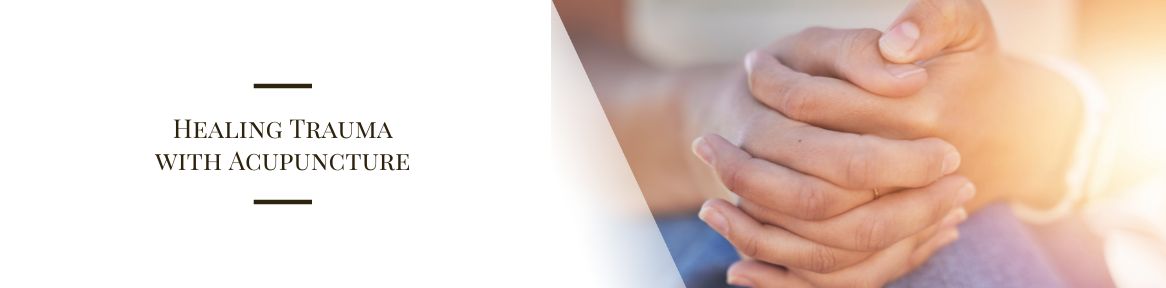
Trauma can be emotional or physical and carries a weight with it for those who suffer from a traumatic event and the longer post-traumatic stress that can come from it. Fortunately, we live in a time where help is available. Since acupuncture subscribes to the whole mind/body/spirit healing approach to balancing energy and achieving complete wellness, it makes sense that acupuncture could be a helpful tool to treating various forms of trauma and its impact on both the mind and body. continue reading
Three Reasons to Add Deep Breathing to Your Daily Routine
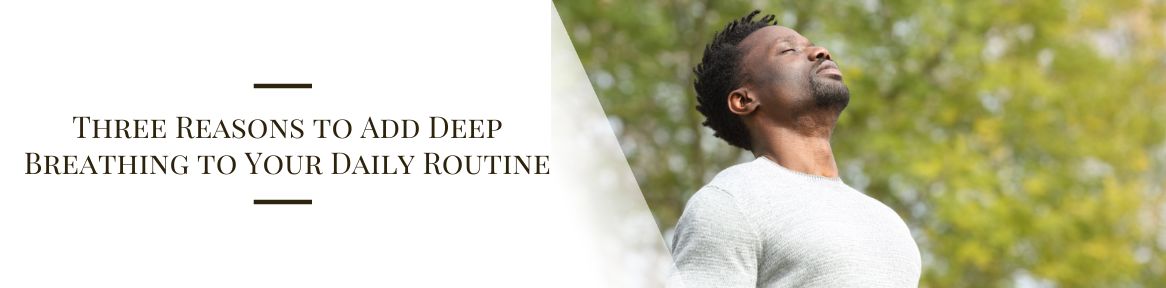
You might think breathing is second nature, right? You’re doing it right now as you are reading this. But did you know that there are different kinds of breathing and that what is called deep breathing can have important health benefits? Read on to learn just three of the most important reasons you should add deep breathing to your daily routine. continue reading
