
diabetes
Halloween: from a Chinese Medical View
 FEAR, in Chinese medicine, is said to harm the kidneys, a mechanism that is easily relatable and biomedically translatable in that when scared, our brains signal to our adrenal glands to release cortisol and adrenaline, which in turn subjectively exhausts our hormonal reserves, or the Chinese concept of healthy blood and fluids.
This blood and fluids are necessary to attract our excitatory hormones and neurotransmitters back downwards so they can do things like transform fluids and allow us to sleep and relax. As they deplete, with age, stress, and self-destruction, we become more prone to more easily releasing cortisol, which perpetuates the vicious cycle. Eventually we run out of cortisol, adrenaline, as well as our fluids that fall under the concept of “blood,” and we die, buried in the ground like the ghouls, goblins, ghosts, and skeletons that started this whole problem in the first place!
CANDY, in Chinese medicine, is said to harm the spleen, which really just means it destroys our digestive system—the system whose job it is to produce the blood and reserves that are necessary to mitigate the side effects of adrenal and cortisol spikes that are relatively unavoidable in modern life. I’ve had many patients who grew up in foreign countries relate to me that while they had plenty of sweets and treats as kids growing up, nothing was as saccharin sweet as what they tasted upon arriving in the U.S.
While it’s nice to be nice to ourselves, forgiving and all that, I believe packaged junk food that really doesn’t expire should be invisible to us if we wish to have any hope for long term health. My wife and I unapologetically shelter our daughter from it as much as possible for as long as possible to give her organs as much time to develop sans the perversion of corporate crap.
With that said… the reason many of us experience sweet cravings when stressed is because cortisol and adrenalin are up, therefore blood and fluids are down, and what substance to better mimic the mush of mucosal fluids than SWEETS? The ancient Chinese used (relatively) sweet flavor herbs, such as red dates, licorice, and rehmannia to “calm the liver”—that is to mitigate hyper-reactions of adrenaline.
SO IT MAKES SENSE! THE LOGIC OF HALLOWEEN IS CONSISTENT WITH THAT OF DAOIST BIOLOGICAL PRINCIPLES! Go out, get scared, have fun, then come home and enjoy a few treats 🙂 Discard or donate the rest. Ignore candy and forget about treats for the rest of the year, or at least until Christmas, for God’s sake, and use healthier options to reattract your stressed floating “yang qi” downwards:
- Nut butters like from Fixx and Fogg
- Dark chocolates like from Blue Stripes
- Coconut yogurts maybe with red dates, goji berries, and/or maple syrup, and/or nut butters with dark chocolate… ANYTHING besides refined junk food, please.
Just as “fear harms the kidneys,” excess anger is said to harm the liver, grief does the lungs, and worry harms digestion as much, if not more than poor diet. None of us, myself included, will ever be immune to worry (no vaccine for that (yet)!), so friendly reminder to have a context of friends, spiritual practice, and/or spiritual community to lean on.
Happy Halloween!
What Should We Be Drinking?
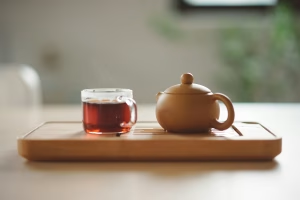 How much water should we be drinking? Is cold water okay? Is coffee healthy or not, already? What about decaf? What about green tea? Green juices? Prune juices? Sparkling water??? Please tell me sparkling water is OK! It’s all I’ve got…
Across the generations (and mediums) there have been many hydration gurus, and I suppose in this blog I’m throwing my hat into the ring, albeit really as just a hopefully qualified echo of Chinese medicine’s biological perspective.
Sparkling water is OK, but can irritate the bladder—should be kept to 1/day.
Room temp water is best, ideally half of our weight in ounces each day. Cold drinks can impair digestion, but again, once a day outside the context of a meal is no big deal, imo.
Juice is worse than people think—green juice not quite as good as people think. Green juices, without the sugars of fruit inside them, are fine, but should not replace real meals where salivary amylase is generated, we actually eat, and chew whole (green) vegetables.
One coffee/day should be fine for most people, but obviously has an excitatory and diuretic effect, so if one suffers with a lot of heat or dryness symptoms, should be minimized. These can include everything from insomnia and irritability to bloating or lack of appetite (dryness of digestive enzymes).
Green tea is preferable in people with “heat patterns,” and/or after a night of eating red meat, which can generate heat in the intestines. Again, because of its bitterness, people who tend to nausea, diarrhea, or lack of appetite should steer clear of green tea, and reach instead for…
PU-ERH TEA! Probably the healthiest thing one can drink besides clean, room temperature water, pu-erh is a black tea known for its naturally occurring pre and probiotics that enhance digestive and gut barrier function, the latter of which gets compromised by stress, medications, or alcohol. And I don’t know anyone who doesn’t check off at least one of these. Best taken hot.
I try to limit myself to 2 caffeinated beverages/day (I think no one should have more than 3), which are routinely a cup of Purity black coffee, followed by a cup of pu-erh, from either ARBOR or YUNNAN SOURCING, both of which offer organic and fair trade, high quality products. Highly recommend!
Breakfast Congee Ideas
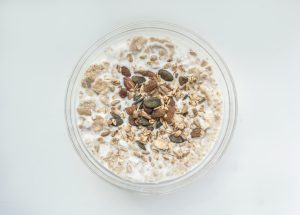
For anyone who is vegan, sensitive to eggs, or just dislikes them, here is a breakfast idea I’ve been experimenting with, both for the sake of variety and, well… experimentation.
In China, (white) rice congee is a common breakfast, often with egg and pickled vegetables, although I realize in the States rice is rather vilified for being a simple carb and high on the glycemic index. While this might be the case, it is also a food that is very gentle on the stomach and internal organs, which from our perspective aids in absorption and digestion, and in the proper dosages can be beneficial. However, for those who can’t get past the glycemic index, I recommend using quinoa, millet, or amaranth.
1 cup of your grain of choice
5 cups of liquid (if you’re going to make the sweeter, I recommend some kind of dairy-free milk—if you’re going for the probably healthier, more Oriental style I recommend just water or either vegetable, beef, or chicken broth) Oils don’t mix as well with the sweet flavors so if you’re making the sweeter version be sure to stir often so as to avoid sticking to the pot.
Boil and simmer about 15-25 minutes, or until it is the consistency of porridge.
Treat the sweet version like you would oatmeal: Top with berries, granola, as little maple syrup as you can discipline yourself to, cinnamon, and/or nuts if you like.
For the Asian version I recommend leftover vegetables and/or pickled cabbage or kraut. Plus, an over-easy or boiled egg if you want the best of all worlds.
Enjoy warm if possible! For those of us with babies or toddlers, we long for the days when we will return to eating hot food.
Whatever you eat, EAT BREAKFAST. I cannot stress this enough. They said breakfast is the most important meal of the day because it is, not because grandma said it, but because science and biology do. Here is a link to an NIH study correlating the skipping of breakfast with increased insulin resistance and risk for diabetes: https://www.ncbi.nlm.nih.gov/pmc/articles/PMC7246451/
I like coffee as much as anyone, but coffee alone (or with a piece of toast) is not breakfast. Protein and/or fat should be consumed, preferably in great quantity.
Nor do I doubt the potential benefits of intermittent fasting, but it is more biologically aligned to skip dinner—not breakfast. If this is impossible, maybe a later breakfast, like 9am? Supposedly, any longer than 2-3 hours after waking constitutes “skipping breakfast,” which is to say the insulin resistant mechanism is set in motion by that time.
If you have no appetite for breakfast this probably indicates your dinner being not fully digested and some metabolic syndrome at work. Please reach out—or try licorice and/or ginger tea 🙂
Is Green Tea Healthy (for you)?
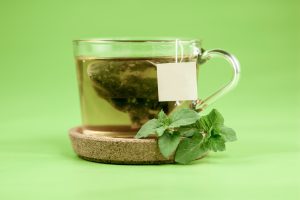 In the western world we are often guilty of over-polarizing and labeling. This political viewpoint is good, that one is bad, this diet is healthy, that one is not. Further on that point, one food is healthy—while that one is not.
While there are many foods that can be oversimplified and universally agreed upon—refined sugars are pretty much always bad and steamed vegetables good—most others depend on the dose, the patient, and time of year. For example, red meat in the winter for an anemic girl trying to conceive is eons more advisable than it is in the summer for an overweight male alcoholic trying to tame his heartburn. Also from a Chinese medical perspective, eating 5-6 ounces of red meat 1-3 times a week alongside vegetables will have an infinitely different systemic effect than 16 ounces 3-5 times a week alongside bread.
Green tea and kale have earned great reputations in the west, polarized as “good,” labeled “healthy,” and presumed to help anyone who consumes them, no matter the body type or time of year. From a Chinese medical perspective: False.
Almost anyone who’s ever drank green tea on a completely empty stomach has experienced the nausea or queasiness its bitter properties can induce. Bitter foods and herbs, while integral to a healthy diet and our pharmacopeia, are harsh on the stomach and less advisable for “Tai Yin” patients—those with weaker, more vulnerable stomachs. Such people generally do better with hot black teas, such as pu-erh or Earl Grey.
When written into herbal formulas, bitters are generally dosed lower and balanced with acrid and/or sweet-flavored herbs. This doesn’t mean to always consume your green tea with sweets, but it is that much more encouraged to never be drank cold or on an empty stomach. In fact, green is the one kind of tea we might encourage to take with honey—that is as long as you’re not the snob that I am, in refusal to corrupt any tea (or coffee) with outside flavors.
The same principle applies to kale. While undoubtedly possessing of all the literal health benefits it claims to, kale is a bitter green, therefore a bit more difficult to digest than other veggies. For this reason, it is important to always consume cooked, with warming spices, such as garlic, onions, or ginger to aid in proper metabolism. I’m not sure about honey on kale—maybe in the context of a salad—although in that case the raw food might cancel out any benefits of the honey. Better to have it with rice or yams to balance your “formula.”
According to teachers, green tea is best taken hot, more in the summer than winter, and more after a night of red meat and/or alcohol to sort of “drain” the heat that these foods create in the gut. Personally, I almost always drink green tea the morning after I go to baseball games! In these instances, the benefits far outweigh its “side effects.”
Please fall victim as infrequently as possible to the idea that certain foods are always healthy or unhealthy. This is rarely the case, also rare that the opinion of the general American public on anything health-related is accurately informed. If you have any questions about a particular food, please don’t hesitate to ask. And don’t take too much kale or green tea.
The Importance of Bland, Sour, & Bitter Foods
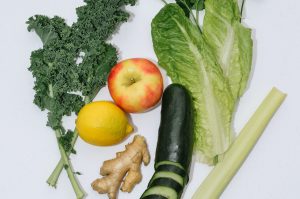 There are three flavors that are resoundingly unrepresented in the typical, daily, western diet, whose void is arguably part of the cause of our leading all first world nations in major disease. Sour foods, bitter, and bland foods all induce important healing mechanisms in the body that can only be fully understood through Chinese herbal medicine.
Sour foods have an astringent effect, which makes it very curious why so many Americans drink lemon water or tea when they have a cold or virus, which we want to do anything but astringe. From our perspective foods like lemon, pickles, (apple cider) vinegar, and sauerkraut might be great for improving immune function to prevent contracting colds, but once we are sick, acrid foods such as cinnamon, ginger, and garlic are more advisable.
Sour foods help to conserve (by astringing) the body’s cellular energy and healthy fluids. If we are completely burnt out, or experiencing symptoms such as muscle cramps, or getting a second wind late at night that prevents a healthy bedtime, these might all be requests from our body for more astringing of resources. Personally, I enjoy lemon water, or sprinkling it on kale, broccoli, and/or asparagus. Tomatoes are great this time of year and sauerkraut is especially balancing with spicy foods. Since the spice will naturally bring fluids up and out, we can use the kraut to counteract this effect and keep nutrients inside. Of course, sauerkraut is generally taken raw, so it is important to eat in conjunction with cooked foods or hot tea to fully digest.
The bitter flavor must be hands down the most unpopular in America, and the reason I figure it to be healthy is because my 2-year-old hates it more than anything—while obviously preferring sweet to anything. In Chinese medicine the bitter flavor clears heat (or inflammation) from the body, which is especially important for the next two months of the year. Scutellariae root clears heat from the lungs, Coptis root from the microbiome, and phellodendron from the urogenital microbiome.
These make up the “three yellows,” and if I’ve ever put them in your herbal formula you’ve likely complained to me the following week. Instead, regular consumption of unsweetened green and/or dandelion tea, most leafy greens, and cabbage can help to mature your palette all while reducing the kind of systemic inflammation that tends to rise eventually into the chest or central nervous system later in life. If you must have sweets after dinner, do so with either hot dandelion or barley tea to counter their effect.
The bland flavor is the toughest for me, because like most people with “damp heat” internal body types, I love spices and flavors, and especially love cooking vegetables in a way that is delicious and not so boring. But while there is a time and place for culinary creativity and indulgence, plain steamed vegetables were a staple in the diets of most human beings for centuries prior, which happened to be centuries of much fewer diseases. Sure, people weren’t living as long, but chronic illness in 40-year-olds was much rarer than it is today.
Poria mushroom is one of our most commonly used bland herbs for draining dampness from the gastrointestinal and urogenital microbiomes. Its bland flavor helps to modulate urinary function and reduce pathogenic fluid retention, and by doing so it has the additionally desirable side effect of calming our minds and spirit. How does this work? By reducing the proverbial internal traffic jams of unwanted fluids, our healthy fluids can then more easily circulate up to and from the central nervous system without diversion or congestion. If spicy foods ramp us up, it should be pretty deductive that bland will calm us, and who couldn’t use more calm?
One idea to incorporate this all into a meal is steamed or boiled broccoli (dress with olive oil if you like), sauteed leafy greens with garlic, salt, and pepper, any tofu or animal protein prepared to taste, and a glass of lemon water, and/or sauerkraut on the side; followed by a hot cup of dandelion or barley tea, with honey if you must.
