Autumn
Halloween: from a Chinese Medical View
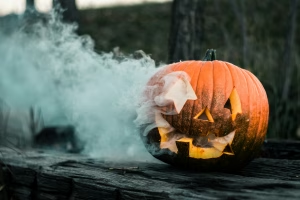 FEAR, in Chinese medicine, is said to harm the kidneys, a mechanism that is easily relatable and biomedically translatable in that when scared, our brains signal to our adrenal glands to release cortisol and adrenaline, which in turn subjectively exhausts our hormonal reserves, or the Chinese concept of healthy blood and fluids.
This blood and fluids are necessary to attract our excitatory hormones and neurotransmitters back downwards so they can do things like transform fluids and allow us to sleep and relax. As they deplete, with age, stress, and self-destruction, we become more prone to more easily releasing cortisol, which perpetuates the vicious cycle. Eventually we run out of cortisol, adrenaline, as well as our fluids that fall under the concept of “blood,” and we die, buried in the ground like the ghouls, goblins, ghosts, and skeletons that started this whole problem in the first place!
CANDY, in Chinese medicine, is said to harm the spleen, which really just means it destroys our digestive system—the system whose job it is to produce the blood and reserves that are necessary to mitigate the side effects of adrenal and cortisol spikes that are relatively unavoidable in modern life. I’ve had many patients who grew up in foreign countries relate to me that while they had plenty of sweets and treats as kids growing up, nothing was as saccharin sweet as what they tasted upon arriving in the U.S.
While it’s nice to be nice to ourselves, forgiving and all that, I believe packaged junk food that really doesn’t expire should be invisible to us if we wish to have any hope for long term health. My wife and I unapologetically shelter our daughter from it as much as possible for as long as possible to give her organs as much time to develop sans the perversion of corporate crap.
With that said… the reason many of us experience sweet cravings when stressed is because cortisol and adrenalin are up, therefore blood and fluids are down, and what substance to better mimic the mush of mucosal fluids than SWEETS? The ancient Chinese used (relatively) sweet flavor herbs, such as red dates, licorice, and rehmannia to “calm the liver”—that is to mitigate hyper-reactions of adrenaline.
SO IT MAKES SENSE! THE LOGIC OF HALLOWEEN IS CONSISTENT WITH THAT OF DAOIST BIOLOGICAL PRINCIPLES! Go out, get scared, have fun, then come home and enjoy a few treats 🙂 Discard or donate the rest. Ignore candy and forget about treats for the rest of the year, or at least until Christmas, for God’s sake, and use healthier options to reattract your stressed floating “yang qi” downwards:
- Nut butters like from Fixx and Fogg
- Dark chocolates like from Blue Stripes
- Coconut yogurts maybe with red dates, goji berries, and/or maple syrup, and/or nut butters with dark chocolate… ANYTHING besides refined junk food, please.
Just as “fear harms the kidneys,” excess anger is said to harm the liver, grief does the lungs, and worry harms digestion as much, if not more than poor diet. None of us, myself included, will ever be immune to worry (no vaccine for that (yet)!), so friendly reminder to have a context of friends, spiritual practice, and/or spiritual community to lean on.
Happy Halloween!
Climate Control for Couples

As a Chinese medicine clinician and a married man, it is always fascinating to me how often opposites attract, not just in terms of psyche or personality, but also physiological proclivities, “constitutions,” as we say.
Besides being the more extroverted or chaotic of the couple, my systemic pathologies tend more to heat patterns—that is excitatory and inflamed, while my wife’s tends more cold—inhibitory, lethargic, or vasoconstrictive. On our good days, as is the case with most couples, this nicely balances the division of labor in their complementing one another. On our bad days, as is the case with most couples… well, they’re bad days.
I half-joke that my wife really should live somewhere in southern California, as she tends to have a very slim sweet spot of tolerance for climactic fluctuations. Too hot or too cold and she’s aggravated, which in turn may or may not inevitably aggravate all present parties. I regularly and fully joke to her that never before I met her had I heard so many reports or internal debate around what to set the temperature at.
Based on dialogue with friends and patients, this is a common problem. One partner is forced to layer up in response to the other’s intolerance for heat or humidity—conversely one is forced to walk around naked with a fan on them in response to the other’s intolerance for cold.
From a Chinese medical perspective—you guessed it—the latter is preferable. Cold is organic, sure, the change of seasons is logical with the laws of nature, however it slows (blood) and contracts (tendons and muscles). Air conditioning should be kept to a moderate level, and the partner less tolerant of heat should limit their clothing, have a fan blowing (indirectly) around them, and sip cool peppermint, watermelon, or chrysanthemum tea to mitigate the climate.
Theoretically, in the long run, this will benefit them, as some mild perspiration may rid some of the fluids trapped at their muscle layer perpetuating their intolerance to humidity. Indoor temperatures can be lowered in the evening when it is organic for our internal temperature to come down.
This doesn’t mean to blast the heat with reckless abandon throughout winter, which would make all of us homeowners completely incapable of affording acupuncture or herbs. While we should protect ourselves from the external conditions, it should be to a moderate degree—one that protects, but doesn’t shelter us, so to speak, so our immunological substances remain primed and prepared to encounter whatever they should during our time outdoors.
As a friendly and annoying reminder, please do not use ice on your aches, pains, and injuries beyond the initially inflammatory 24-hour period. Dr. Gabe Mirkin, the doctor who wrote the R.I.C.E. protocol in 1978, has since written a public article rescinding his previous advice, inadvertently but not explicitly in accord with Chinese medical thought.
Heel Pain & Autumn Equinox
 I recently experienced mild heel pain around the center and edges of my right heel, if not for the first time ever, surely the first in a long time. While one night watching TV last week, I simply needled the “heel point,” located in the center of the base of the palm, just distal from the wrist crease—not one of the body’s more forgiving, gentle points, but tolerable. While the point was in, I rotated my foot and even massaged the heel a bit with my other hand. The next day it was better.
Why needle the hand? And how did this happen, beyond just the lazy etiological platitude of “getting older?”
We are embarking into autumn, the season ruled by the lungs and large intestine. The function of these wonderful organs is to distribute substances downward, quite obviously in the case of the latter, but we also think of the lungs’ function as down bearing, depurative, in distribution of gases and fluids to the lower region of the body—hormonal reserves and essential fluids.
This is why ancient Chinese called the lungs “mother” to the kidneys—the former “engenders” the latter by way of this mechanism of distribution. “Engenderment” in this case might be understood as adrenal and hormonal health’s reliance on ample distribution of fluids and gases from the upper regions of the body. This is why it is important, in my opinion, to consider daily yoga or qi gong routines before resorting to hormone replacement.
What’s more, many of us have also had the experience of having a morning bowel movement on the heels—no pun intended—of morning breathing exercises or yoga, underscoring the inseparable connection between the lungs and intestines along the gut-lung axis.
“The heel point” is not magical. The heels are where the kidney and urinary bladder vessels begin and end respectively, surely highlighting how overworked I may have been, as well as admittedly my own progress along the aging process. When we have heel pain, there is a good chance the lungs are not pulling their weight insofar as distributing anti-inflammatory substances to the bottom of the body. Located at the base of the palm, the point is just lateral to acupuncture’s lung vessel. It acts as a mirror to the heel, not just because of cute bodily holograms, but because the kidneys rely on their mother for circulation.
This “mother son” relationship exists between all our organs and structural parts. For example, pain in the groin exists along the liver vessel, whose mother is the kidneys, which reside in the lower back adjacent to the lumbar vertebrae that innervate the groin! Pain in the knees usually exists along the stomach or pancreatic vessel whose mother is the heart, another organ whose primary function is to distribute blood downward—and the knees can be a long way to travel.
If you or a loved one experiences pain, it’s great to understand it from a musculoskeletal perspective and take care orthopedically, but if you are interested in its root cause, why it happened to land in that place on your body instead of elsewhere, please reach out!
The 4 Seasons of Each Day
 While many people are preoccupied with what foods are good for them, what foods are “bad,” and which exercise is ideal, from a Chinese medical perspective it is easier to simplify: The more we live according to the Dao (the scientific way of nature), the less ailments we will have. The less we live with the Dao, the more ailments we will have.
One Daoist, and subsequently Chinese medical principle is that each individual day contains within it the same seasonal arc that we experience in each year. Obviously, this does not mean that every day in January and February around 12 noon the temperature visits 80 degrees (though wouldn’t that be nice? But confusing). The arc is relative.
The morning hours correspond with the mechanisms and principles of spring. Rise and shine. “Plant seeds” for the day, in the form of a healthy breakfast and possibly setting one’s intentions. If you truly don’t have time for a good breakfast during the week, try to have an earlier lunch and be sure to do so on weekends. Morning is a good time for exercise, but not as ideal as mid-day, nicknamed “Tai Yang,” most yang and/or high noon.
Mid-day corresponds with summer. It is when most people have the most energy, hence it is the time to be most physically active. Since Chinese medicine views most parts of the body from a “use it or lose it” perspective, the less disciplined we are about engaging in at least some movement during the Tai Yang hours (11am-3pm), the weaker we will become. Again, if this is challenging during the work week, I recommend finding and committing to 15-minute windows, then “realer” workouts on weekends.
Sunset to nighttime obviously equates with autumn and winter, hence regenerating and restoring, winding down until sleep. This parallel is the one with an apparent hole in logic, as we recommend eating more calories in the winter than summer, but more during the day than at night when the body is relatively more insulin resistant. My understanding is the premise is more applicable to activity than caloric consumption, and principles of relativity still apply. Eat smaller meals for dinner in summer than in winter and remain restful at this time during all seasons. If you enjoy going out and indulging with friends once or twice a week or once or twice a month, by all means do so, but follow a more Daoist schedule on all other days.
In my opinion, there is actually virtue to a lot of “gimmick diets,” abstinences, and new age health regiments. However, in thousands of years, neither the human body nor nature has changed very much. If it had our medicine would be rendered wholly ineffective. Follow the Dao.
Go to sleep at a healthy bedtime, eat a healthy breakfast, exercise at mid-day.
Eat cooler foods and less foods in summer—warmer and more foods in winter.
Minimize indulgences, stress, and reductionist medicines.
Treatment for Loss of Voice
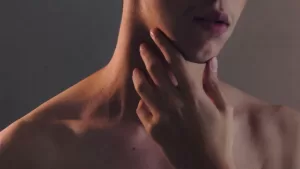
As we approach an exciting Yankees first World Series appearance in 15 years, Halloween, and an even scarier Election Day, there’s a good chance a lot of people will be losing their voices, as a result of screaming and shouting, hopefully for joy. Couple that with the dry autumn season, which corresponds with Chinese medicine’s lung channel, and many will be more prone to hoarseness and/or dry, hacking coughs.
Aphonia, or loss of voice, can happen for one of two reasons in Chinese medicine:
- The adrenals that secrete hormones, such as estrogen are weak and/or weak in reserves and there just isn’t enough fluid to lubricate the throat. For this, the best self-care recommendations are eating good quality pork and beefs and getting plenty of rest, with early bedtimes. Herbal medicine is preferable to acupuncture, namely formulas that help strengthen the kidneys and generate systemic fluids.
- Dryness exists more around the pancreas and stomach organs, subtly impairing digestion and giving rise to dry, inflammatory heat that tends to flare up into the chest and throat, then drying out the fluids up top and creating a vicious cycle. Labeled a “Shao Yang” pathology, this is common in singers and teachers, and can be treated with acupuncture and/or herbal medicine. Best self-care recommendations are possibly a bit more exercise, white rice, and/or congee and sweet potatoes, red date tea, and again, early bedtimes.
Of course, there are other causes, other etiologies and contributing factors, such as being on one’s menses, which dries out the internal blood, which in turn dries out either the kidneys or digestive organs, exemplifying these patterns as primary suspects to target in treatment.
Peppermint tea with honey is another fine option to treat, although if you are prone to bloating, loose stool, or lack of appetite, honey might not be the best thing for you.
On the other hand, ginger tea is likely to aggravate this situation due to its drying nature. While potentially very healthy, ginger has earned itself an undeserving reputation as unconditionally so, especially when treating people suffering from anemia or any chronic dryness.
When navigating any form of soreness or dryness from the chest up it is advisable to avoid hot sauce or spicy foods, as they can obviously aggravate the inflammation. Ironically, it is equally advisable to avoid iced cold drinks, which constrict vasculature around the throat and further impede the arrival of healthy systemic fluids to lubricate the region
Wishing everyone a lubricated throat and organs in these highly anticipated events!
I’m predicting Yankees in 7.
I’m predicting Kamala.
And in a group family effort, I will be Olaf from Frozen for Halloween. Pics to come!
