Traditional Chinese Medicine
Happy New Year, from DFA!
 A quick re-cap on the year 2025 in the rearview, the “year-view,” if you will, otherwise “year in review” (clearly being a dad is impacting my jokes)!
A lot of business as usual in the way of business—my same schedule of 3 days a week in the office, plus one supervising in the school clinic at Pacific College, partially highlighted by our appearance on Ben Aaron’s PIX-11 News segment.
I also gladly welcomed my first ever part-time assistant, Kira Schneider, a great acupuncturist in her own right, with a private practice in Princeton, New Jersey.
This year’s continuing education was also more of the same, as Chinese medicine’s foundational text, the Shang Han Za Bing Lun, takes a lifetime to study and master. In addition to reading my nightly passages, I credit Genevieve Le Goff of California, with most of the knowledge I gained last year.
In the first week of this new year I’ve added to my repertoire, virtually lecturing 2 courses per week on Classical Chinese herbal medicine with the Virginia University of Integrative Medicine, which happens to have a New Jersey campus located just a few miles from my mom.
Speaking of which, Mom’s hangin’ in there, my wife, Dr. Jillian Cohen, just got the first ever fellowship at Hackensack Meridian Health’s Integrative Medicine department approved, and daughter Peyton has since turned 4 and 4 1/4, rapidly approaching 4 1/2, and has not been made aware that she’s about to have her second trip to Disney in two years (hopefully this time sans coronavirus). She remains infatuated with everything princesses and drawing (including occasional household furniture vandalism), and her bilingual Spanish abilities are improving, inevitably to surpass my own.
Curious to hear if anyone has any exciting news from last year and/or regarding the year to come—especially if it’s something I should be sharing on my newsletter to benefit fellow clients and friends.
To Morning Exercise or Not to Morning Exercise
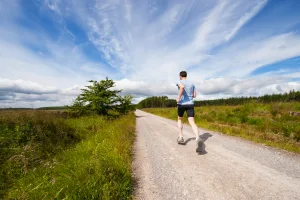
Patients (and students) can be good teachers, and one recently reminded me of an important premise, as she reported feeling much better since beginning to exercise in the morning upon waking, before breakfast, before doing anything else. For her, this made sense. For approximately the other half of the population it would not.
Sunrise in Chinese medicine is Shao Yang time, the time of day that corresponds, logically, with the body’s pivot, that is the system whose responsibility it is to use cortisol to bring vital substances, such as immunological or hormonal, upwards in the body. For those of us whose cortisol spikes too quickly or too early, exercise is one way to temper this surge. Interestingly, healthy food is another way. While physical movement can clear some of the inflammatory heat associated with morning cortisol, a proper breakfast of protein, unrefined sugars, and/or healthy fats can also act as an anchor to prevent it from spiking so much in the first place. For the types of people more prone to insomnia, hyperactivity, and fast metabolisms, it seems a moderate morning workout shortly followed by breakfast might be ideal.
For the opposite body type, prone to hypersomnia, chronic fatigue, and/or weight gain, a better time to exercise might be the time of day associated with the most “yang qi,” or warmth, closer to 12 noon, as these people tend to be more lacking in cortisol, as well as other excitatory chemicals, and therefore will benefit more by moving in accord with the environmental nature around them.
For those of us with small children at home, who cannot exercise upon waking, or those with jobs that preclude us from exercising just before lunch, I recommend doing what you can. Everyone is busy, but if you can find 15-30 minutes/day to get in your preferred form of movement, almost every scientific study on the subject since the beginning of scientific studies corroborate the benefit.
Black Friday & Raw Ginger
Friendly reminders for the next cold month of holiday season: To ward off cold weather most of the body’s excitatory and invigorating substances rush to the surface, thereby leaving our metabolic and endocrinological layer more vulnerable to cold and/or hypo-functionality. This can be the case even in places like Los Angeles, where the climate is relatively colder than what its inhabitants are used to.
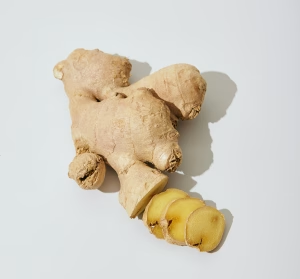
A daily cup of ginger can warm our “more internal parts,” as to do with organs and hormones. I would recommend 3 slices, as depicted here, simmered in 3-4 cups of water for 30-40 minutes. If you’re dealing with sinus and/or respiratory issues you can use 4-5 slices, which changes the chemistry of the ginger to act more upon the lungs. If your physiological pattern includes “blood deficiency,” it is advisable to combine with a teaspoon or tablespoon of honey, or a few red dates, so as to not aggravate dryness.
Little known facts about raw ginger:
- can raise blood pressure and heart rate
- Increases stomach motility and acid secretion
- Evidenced to have an antibiotic effect against Salmonella typhi (Typhoid fever), Vibrio cholerae (Cholera), and Trichomanas vaginalis (an STD). Obviously, consult your physician. If used in such cases it should be within the context of a greater, targeted, customized formula
Second and final reminder: BLACK FRIDAY!
$50 OFF all follow up sessions and $100 off initial visits between now and New Year’s. Exclusions include those with 10 discounted session packages, those receiving superbills, and of course insurance patients.
Mitigating the Side Effects Of Holiday Indulging
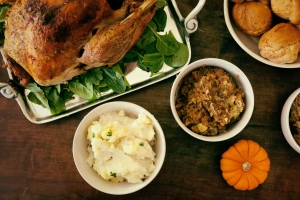
As all of our stomachs, intestines, livers, and pancreases quiver in fear, anticipating the overindulgences to come in the next six weeks, there are steps we can take to mitigate their onslaught of abuse, first and foremost of which is to potentially be mindful to not over-abuse—an unrealistic request for enough of us! So, what OTHER MEASURES can we take?
- Strength training: By making good use of the excess proteins and calories we can getbigger and badder musculature, and since the muscles draw upon the pancreas and stomach for tonification, strength-training provides the additional benefit of putting less burden on these organs, enabling them to better deal with the burden of parties.
- Hot tea: Booze if you must leading up to, during, and even after the meal, but bookmark your gluttony with hot tea—either Pu-Erh, which contains naturally occurring pro-biotics, or whichever flavor floats the boat. Hot tea will dilate and relax the blood vessels of your enteric nervous system (belly) which aids in digestion by breaking down the inevitable accumulations of gravy, yams, and butter.
- Breakfast! Some people make the mistake of skipping breakfast (or even lunch) the morning of Thanksgiving to “make room” for the feast to come. This is an error, as skipping breakfast actually sacrifices some of the gut’s enzymes and beneficial acids, which can make digesting the feast more difficult. Fine if you want to go small, but have something, preferably, oatmeal, millet congee, or eggs and vegetables.
- Stress management: The holidays bring at least one challenging individual into our homes, so in the words of my daughter’s favorite song: “Let it go.” Ignore if possible, just for the day, and re-address if you must the next time you speak to them.
- CHINESE HERBS! Last but not least, YOU GUESSED IT! Commonly used ingredients include hawthorn berry, which can lower cholestrol, magnolia bark if you’re the type who feels gassy and stuffiness in the chest, tangerine peel if you feel too low on appetite to get properly gluttonous, obviously ginger and licorice, the latter if you tend to GERD, also barley sprouts or medicated leaven, which are great for food stagnation.
If you’d like a brief consultation to determine what is the best gluttony-support formulation for your body type and indulgence to come, please don’t hesitate. If not for my own gout disease and general health awareness, I myself would have the inclination to over-indulge frequently, regardless of holiday season.
A brief expression of gratitude. I realize that Chinese medicine is inconvenient. It’s expensive, it tastes bad or it hurts for a moment, it takes time out of the day, etc. etc. I am grateful to all of my patients for trusting me, relying upon me, and staying the course, often through the trial-and-error process that in my opinion real medicine should look like. Happy Thanksgiving!
Chinese Medical Dermatology
 November is skin care awareness month, and although it is not a subject I discuss often in my blog or instagram, dermatology makes up a huge part of Chinese medical literature. As always, I hope and believe people will consider us to treat the actual root (not “the root” that certain pharmaceuticals’ TV ads claim to) of any skin issues that might befall them.
The first time my daughter had Covid she recovered quickly, as most babies and toddlers do, but it left her with some atopic skin issue on her face. We applied some topical creams that had been helpful with issues in the past, but to no avail. I consulted a teacher of mine, who recommended a formula we don’t generally think of for dermatology. It would be more categorized—that is oversimplified—as an immunological treatment, containing all the usual suspects for an exterior virus: Ephedra, ginger, wild ginger, cinnamon branch, etc.
My apologies for the cliche, magical resolution anecdote, but it does happen and did so here, probably and partially because of how young and fundamentally healthy she is. Her skin cleared up within 24 hours, to never return. We didn’t even finish the recommended dosages.
In Chinese medicine the liver is said to connect to our tendons, the stomach to our muscles (which is why proper diet can potentiate strength training), kidneys to the bones, and lungs to the skin. One way or another, most skin issues can be traced back to either our lungs, or their “paired organ,” the large intestine. In the case of my daughter, it was obviously the former.
There are 2 fundamental reasons why our skin erupts. Either inflammation trapped somewhere in the body is seeking an escape route, or a lack of blood and vital substances in the body are failing to reach the surface to lubricate and/or nourish our proverbial “exterior.” To assign the same prescription to both patterns based on a biomedical label would be ludicrous.
Cases of the former generally present as hot, red, itchy, and angry, whereas the latter are paler in color, dryer in texture, and more troubling cosmetically than anything else. Nevertheless, cosmetics matter. We’re all entitled to nice skin—more importantly to the quality and quantity of blood that belies it.
Hot and red, itchy skin generally benefits from a (closer to) vegan diet, plus bitter and anti-inflammatory herbs and foods, such as dandelion greens, kale, green tea, and a hiatus from alcohol. Acupuncture points are used to clear heat and fluid retention. We might also bleed particular vessels near the sites of eruptions to help move stagnant blood perpetuating the vicious cycle. Herbal medicines might revolve around gardenia fruit and scutellaria bark.
Pale, dry skin earns the opposite recommendation: Meat, beef, and more meat, bone broth, eggs, and plenty of sleep to help restore and regenerate blood. Black tea instead of green tea, the latter of which might further weaken the stomach with its bitterness; and moxibustion more than acupuncture to help warm and strengthen the organs. Herbal medicines likely revolve more around angelica and peony root, both of which can also be instrumental in reducing menstrual cramps. In both patterns, abstinence from dairy is advisable.
Finally, and as always, important to get your annual skin cancer scans with your dermatologist to rule out anything that is better taken care of with modern technology.
